



In this article you will learn all about:
Cordless Screwdriver, Drill or Impact Drill?
The Cordless Screwdriver
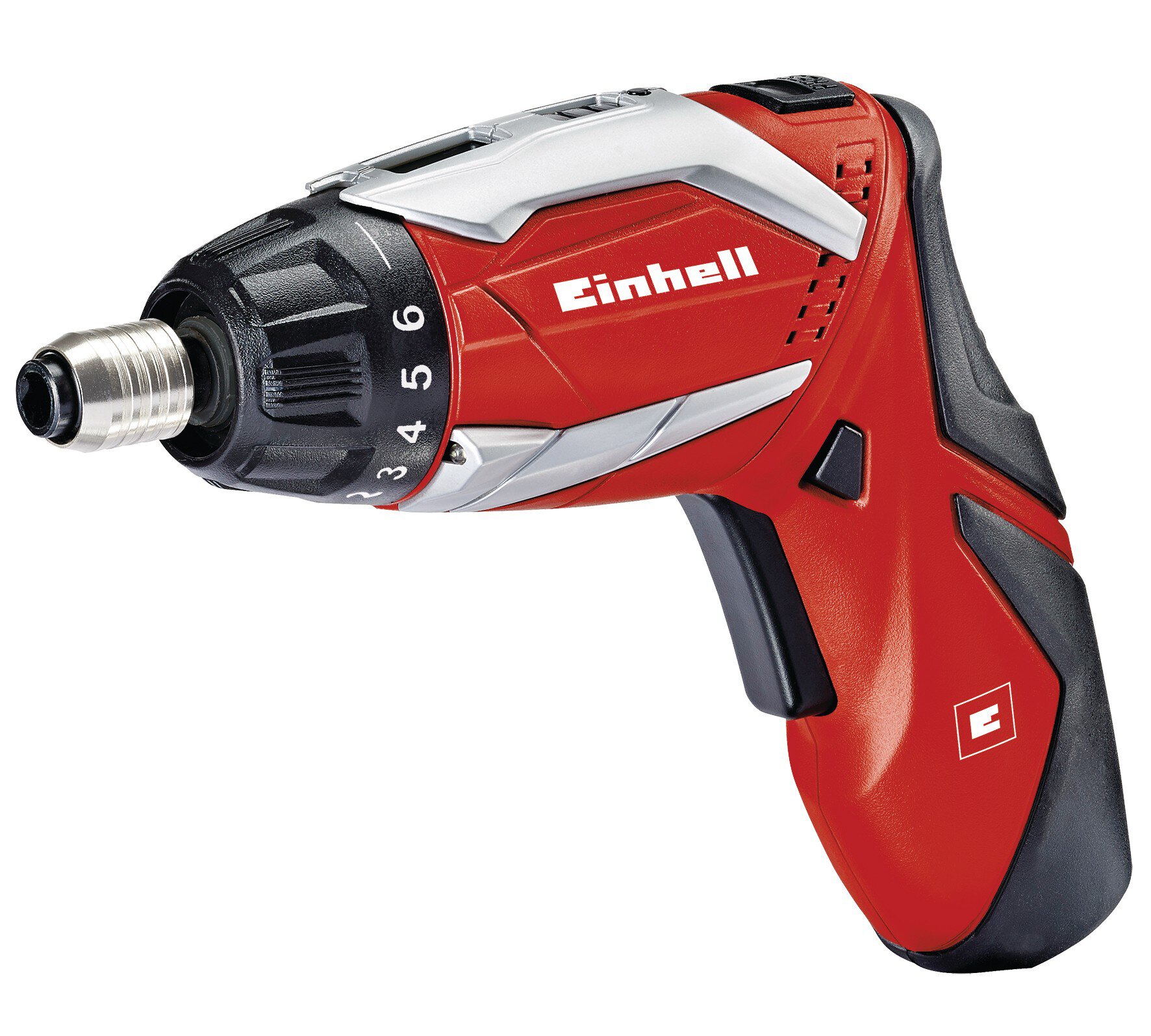
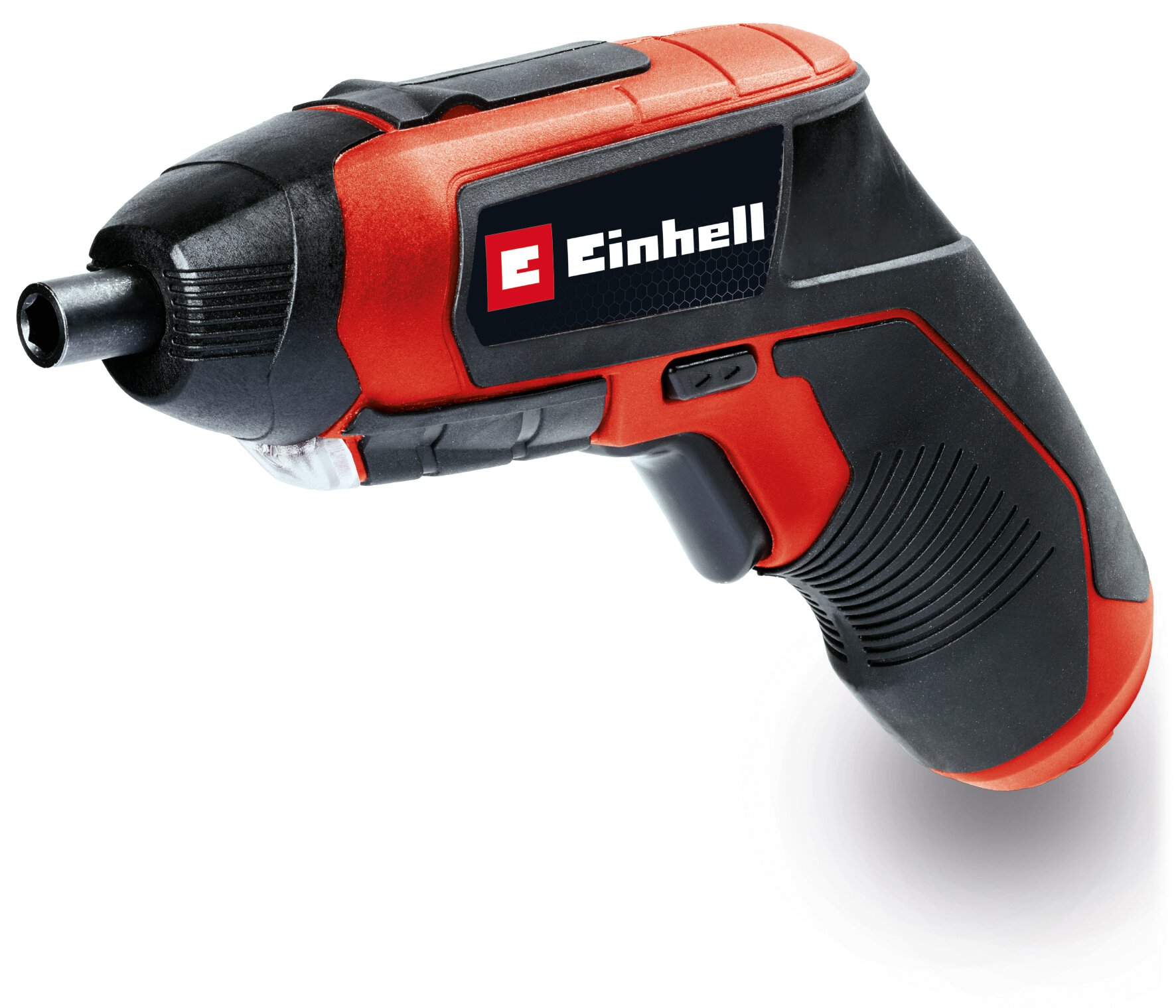
As the name suggests, the "real" cordless screwdriver is purely a device for screwing. As a rule, cordless screwdrivers therefore have no drill chuck and only one gear. This is also quite sufficient since a pure cordless screwdriver is usually used only in smaller applications, e.g. in the assembly of furniture, where he replaces the classic screwdriver. For this purpose, the cordless screwdriver is ideal: it is small, light, handy and can therefore be used in the cramped space of a drawer to be mounted.

Perfect for handy DIY projects: the cordless screwdriver.
The Drill or Cordless Drill
Again, the name provides information about the functions: the (cordless) drill combines drilling and screwing in one device and is thus probably the most widely used tool of a DIY enthusiast. Nevertheless, it is still used in everyday life under the term "cordless screwdriver". In contrast to the pure cordless screwdriver, however, the cordless drill has a drill chuck and two gears to distinguish between drilling and screwdriving. Which gear is used for what and why will be explained again in detail below.
In addition to the cordless screwdriver, such a device can in many cases also replace the conventional drilling machine (without impact!). The drilling machine is a wired device created to drill in a variety of materials. A cordless drill is more flexible and easier to use thanks to battery operation, but often has less power. Here it is helpful to compare the watt specifications of the devices. For normal home use, so for example for drilling in wood and metal, the cordless drill is usually completely sufficient. For harder materials, e.g. in order to mount a lamp on the reinforced concrete ceiling, however, it is necessary to reach for the impact drill or the hammer drill.
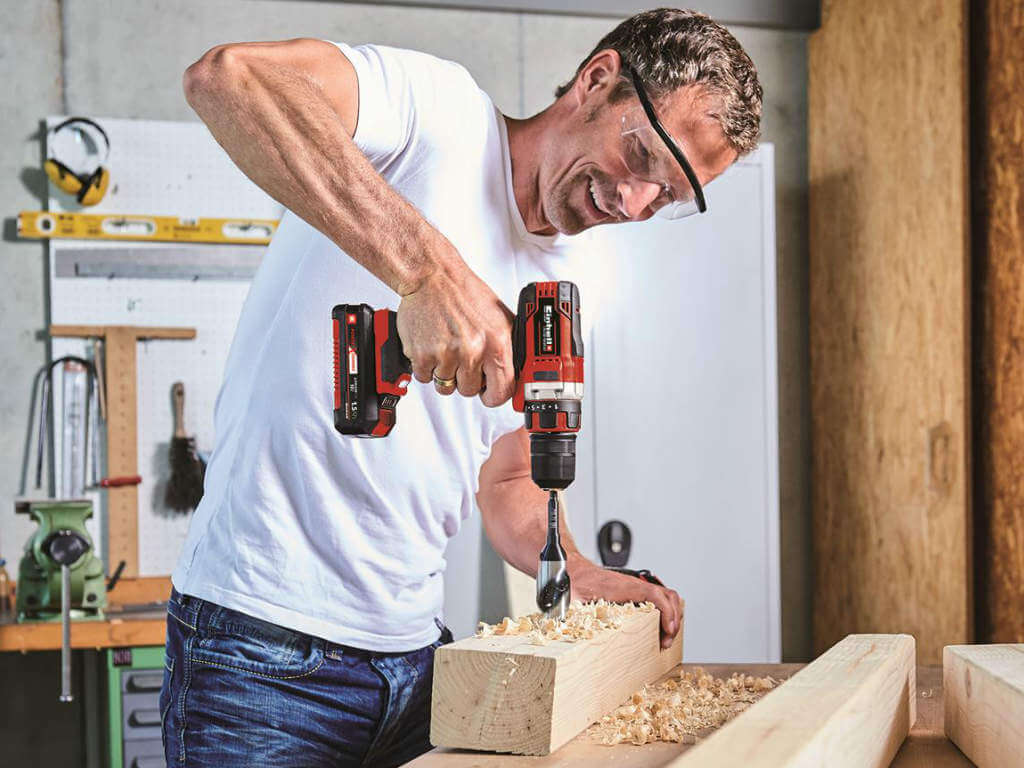
In addition to screwdriving, the cordless drill driver can also be used for drilling into wood or metal.
The Cordless Impact Drill
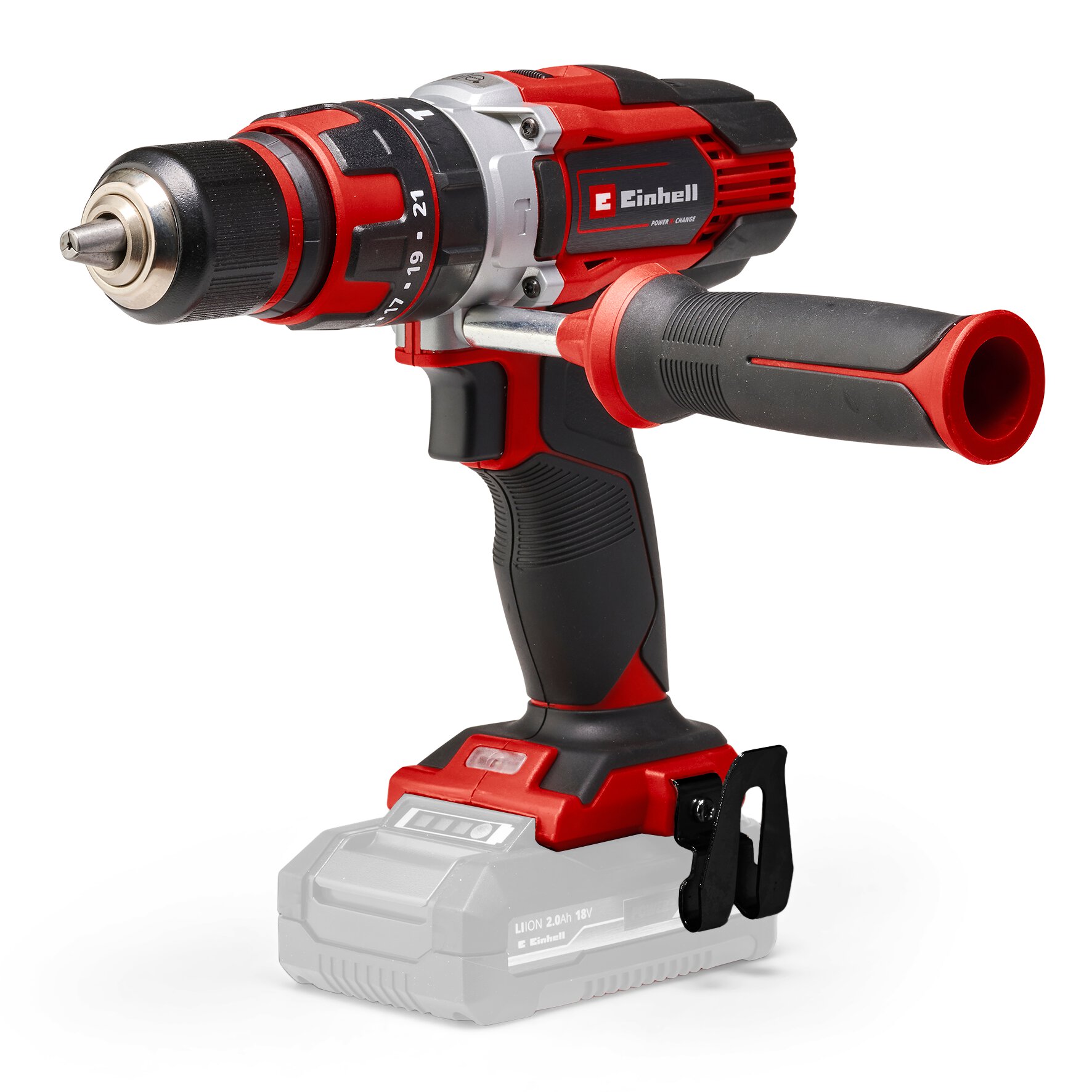
The cordless impact drill is the all-rounder in the workshop: in addition to the two functions of screwing and drilling of the cordless drill, the impact drill has an adjustable impact function when drilling. Here, the drill is placed in addition to the drilling movement with a mechanical percussion in a vibratory motion. This makes it suitable for drilling in concrete and masonry with the right accessories. When the impact function is deactivated, it can be used like a normal drill. Since the weight and handling of the impact drill does not differ much from the simple drill, many do-it-yourselfers prefer the rather cumbersome impact drilling machine.
The impact function in a cordless impact drill is axially aligned. This means the force is directed forward to be able to penetrate with a corresponding drill in harder materials. For example, to attract a nut requires a radial direction impact force (force action along the radius), like a cordless impact driver has.
If you want to drill mainly in stone and concrete and possibly also want to do chisel work, then you should use the hammer drill. We have dedicated the difference between hammer drill and impact drilling machine an own contribution.
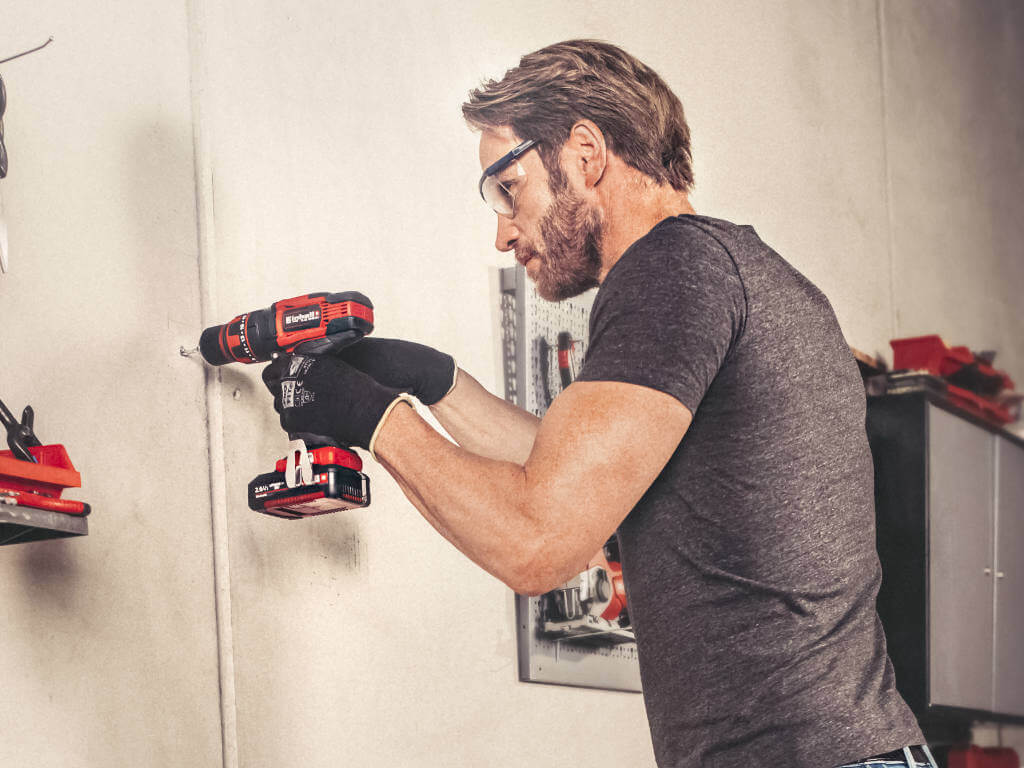
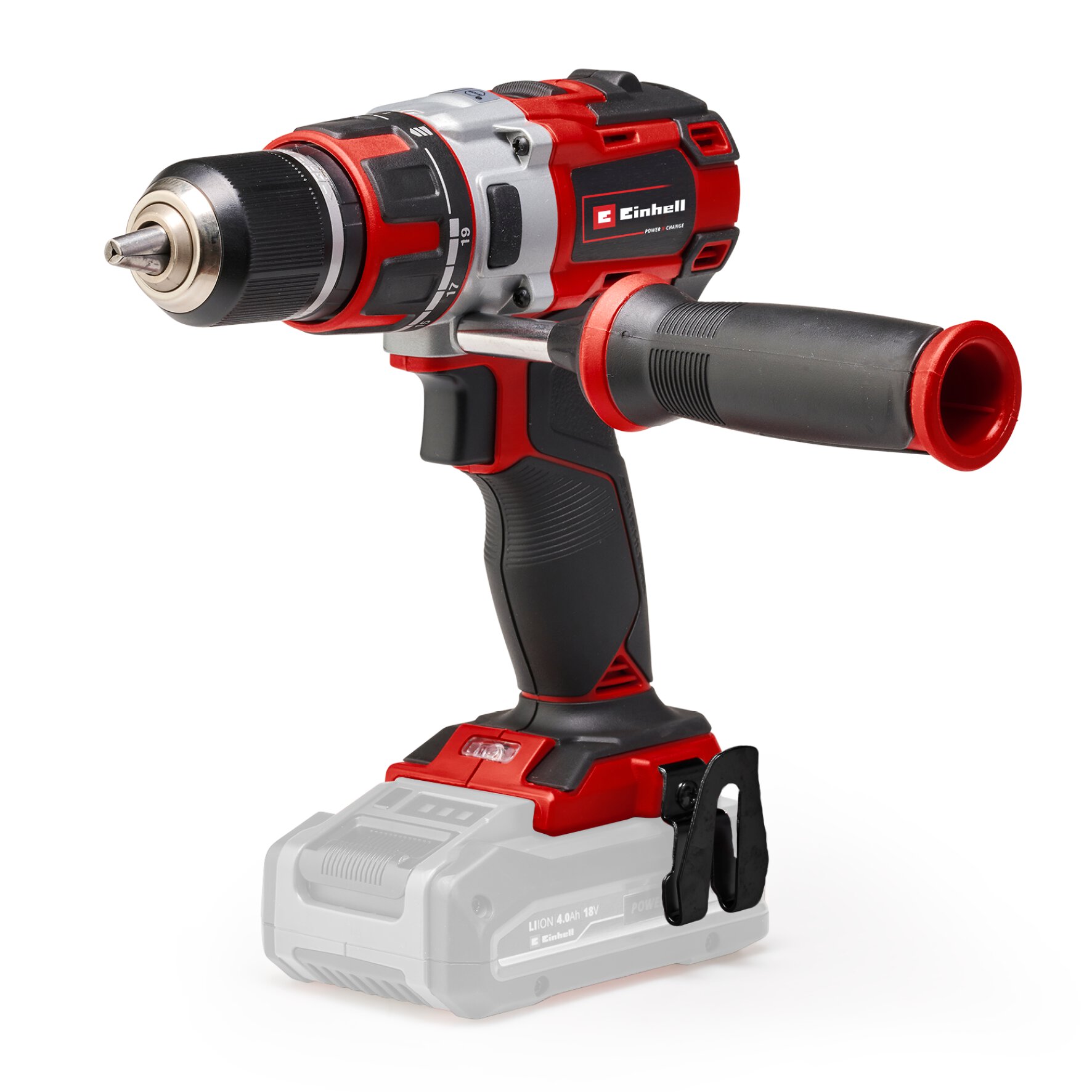
The cordless hammer drill combines everything: screwdriving, drilling and hammer action.
Torque and torque limitation
The torque
Torque is a physical quantity that describes the turning effect of a force on an object. The more torque acts on an object — in this case, for example, a screw — the more strongly that object tends to rotate. Torque is measured in newton metres (Nm). Cordless screwdrivers — including cordless drill drivers and cordless hammer drills in the following explanations — with a higher torque therefore have more power.

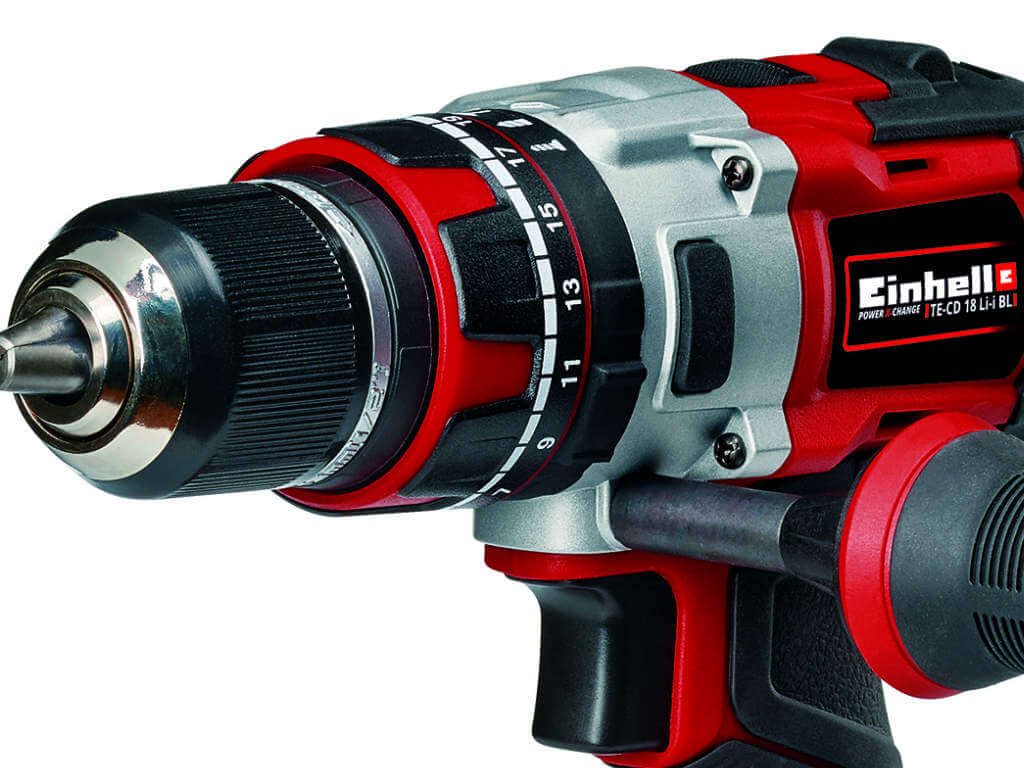
To do this, simply turn the torque setting ring all the way down and then increase it step by step until you reach the desired setting. This is not necessary for drilling. For drilling, select the drilling function, usually shown as a drill symbol on the setting ring. However, care is also required when drilling: the speed must be adapted to the material. The speed can be controlled using the trigger switch. In addition to the material, the drill bit diameter plays an important role. As a rule of thumb: the larger the diameter, the lower the speed.
Torque limitation
Sometimes, however, the power needs to be limited. Torque limitation or torque shut-off is a practical feature of modern cordless screwdrivers that limits the tool’s force during delicate screwdriving work in soft materials. When driving screws into wood, for example, it can quickly happen that a screw is driven in too deeply. In the worst case, the screw head can even split the wood. With torque limitation, the slip clutch engages and prevents more force from being applied to the screw as soon as the preset torque value is exceeded. To countersink a screw flush with the wood, start with a low torque setting and gradually increase it until the desired result is achieved.
Which gear for which application?
Most common cordless drill drivers have two gears: a slower gear, gear 1, and a faster gear, gear 2. While the faster gear allows quicker work progress, the slower first gear provides more power. Larger screws or screws with a greater diameter can already become a challenge in second gear. In first gear, the tool works at a lower speed and can therefore apply a higher torque, meaning more force, to the screw. By comparison, when driving a car, you also use first gear to pull away. In addition, the lower speed gives you more control over the material and helps prevent the screw head from slipping, twisting or becoming damaged. Second gear is mainly used for drilling. Here, there is usually less resistance, meaning less force is required and you can work at a higher speed.
Cordless hammer drills also have a third function: hammer drilling. This is activated when drilling into stone or concrete.
Changing the drill chuck without spindle lock
The drill chuck is the clamping device at the front of the machine, where drill bits or screwdriver bits are inserted. Before replacing it, the battery should always be removed to prevent the tool from switching on accidentally. First, open the drill chuck completely to check whether there is a retaining screw inside. This screw prevents the drill chuck from coming loose during operation.
If a retaining screw is present, use a suitable slotted or Phillips screwdriver to avoid damaging the screw head. Important: Many retaining screws have a left-hand thread and are therefore loosened clockwise.
Then clamp the largest possible Allen key firmly into the drill chuck. With a short, forceful hammer blow on the key, the drill chuck is loosened counterclockwise and can then be unscrewed.
The new drill chuck is aligned straight and screwed onto the spindle clockwise. It is then tightened using the clamped Allen key. If there was a retaining screw, it is reinserted and, due to the left-hand thread, tightened counterclockwise.
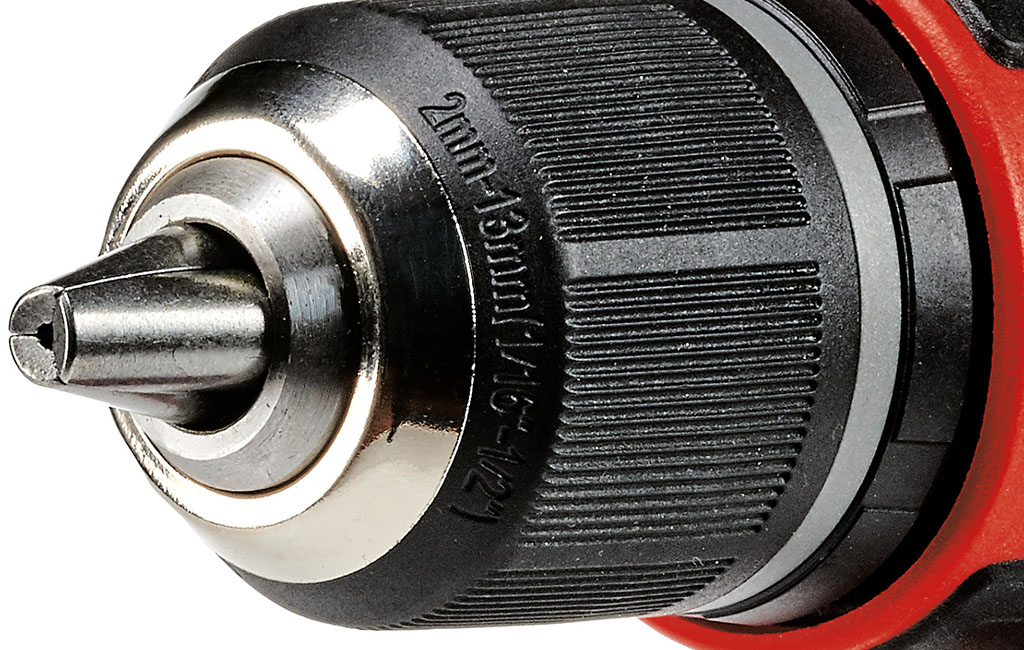
A spindle lock makes this process much easier, as it blocks the drive shaft and allows the drill chuck to be loosened with less effort.
What does brushed or brushless mean?
In tools with conventional electric motors that use carbon brushes, these brushes are subject to normal wear and need to be replaced after a certain period of time. By contrast, cordless tools with brushless motors have only minimal friction losses, mainly in the bearings, and therefore help prevent unwanted interruptions caused by overheated motors.


In addition, no maintenance of the carbon brushes is required, which increases the service life of the tools. Brushless motors also offer greater power and more energy-efficient operation thanks to their high efficiency, resulting in a longer runtime on a single battery charge.
The right battery
With our Power X-Change batteries, the individual batteries generally fit all tools within the same series. Nevertheless, the batteries differ in terms of capacity, power and runtime. Which battery is best suited therefore depends largely on the intended application.
For smaller jobs, such as those often carried out with a cordless screwdriver, batteries between 1.5 Ah and 2.6 Ah are usually more than sufficient. They are lighter, more comfortable to handle, have a short charging time and are often cheaper to buy. These slim, single-row batteries are also a good choice for many tasks with a cordless drill driver.
When longer runtimes or more power are required, larger batteries are the better option. In the Power X-Change range, these include batteries between 3.0 Ah and 5.2 Ah, for example. They not only offer more endurance, but often also more power. However, they are heavier, which can quickly become tiring, especially when working overhead.
The battery should also be matched to the tool for other cordless devices. For a cordless circular saw, for example, a larger battery such as 5.2 Ah makes sense, as a lot of power is needed and the additional weight is less of an issue. For tools such as angle grinders or jigsaws, both 3.0 Ah and 5.2 Ah batteries can be suitable, depending on the task.
💡Tip
A battery with 3.0 Ah offers a good compromise between manageable charging time, strong performance and long runtime during operation.

One battery, many possibilities: With Einhell PXC batteries, you can flexibly power numerous tools from the Power X-Change family.
Cordless Screwdriver, Drill and Impact Drill in Comparison
Summary and tool recommendation
| Cordless Screwdriver | Drill | Impact Drill | |
|---|---|---|---|
| Advantages | mobile, without cable | good handling due to lightweight, compact construction | wide range of functions |
| very low dead weight | wide speed range | drilling in stone/concrete with impact | |
| compact construction, cheap | screwing and drilling work | drilling in metal and wood without impact | |
| Disadvantages | limited applications | no impact function | partly a bit higher weight |
| no drilling function | no drilling in masonry/concrete | ||
| only for small screw-driving |

Published on 07.11.2019