




In this article, you will learn everything about:
What to watch out for when drilling through metal?
We all know that metal is way harder than wood. There are hence a few rules to abide. If you remember these, working with metal will become easy for you.
The right drill for metal
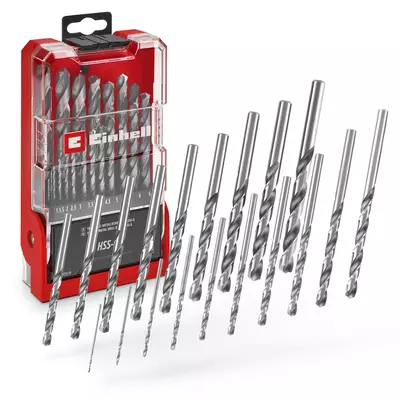
To drill metal you will need a HSS drill bit. HSS stands for High‐Speed Steel. These drill bits have a point angle of 118 degrees. If you however want to drill harder metals like stainless steel, you will need the HSS drill bit with a point angle of 135 degrees. These somewhat flatter drill bits help you centre far better when drilling through hard metal.
| Drill bit Ø | Steel / mild steel | Stainless steel | Aluminium | Brass |
|---|---|---|---|---|
| 2 mm | 4000 rpm | 1250 rpm | 12750 rpm | 9550 rpm |
| 3 mm | 2650 rpm | 850 rpm | 8500 rpm | 6350 rpm |
| 4 mm | 2000 rpm | 650 rpm | 6350 rpm | 4750 rpm |
| 5 mm | 1600 rpm | 500 rpm | 5100 rpm | 3800 rpm |
| 6 mm | 1350 rpm | 400 rpm | 4250 rpm | 3200 rpm |
| 8 mm | 1000 rpm | 300 rpm | 3200 rpm | 2400 rpm |
| 10 mm | 800 rpm | 250 rpm | 2550 rpm | 1900 rpm |
| 12 mm | 650 rpm | 200 rpm | 2100 rpm | 1600 rpm |
💡Tip
The larger the drill bit, the lower the speed. When drilling stainless steel, it’s better to work more slowly, cool the drill bit with cutting oil, and avoid applying too much pressure. If the drill bit turns blue, squeaks, or the material becomes very hot, the speed is usually too high or there is not enough cooling.
The right drill bit for metal
For drilling into metal, you need an HSS drill bit. HSS stands for high-speed steel. These drill bits typically have a 118-degree point angle. However, if you want to drill into harder metals such as stainless steel, you should use HSS drill bits with a 135-degree point angle. These slightly flatter drill bits are much easier to center when you start drilling into hard metals.
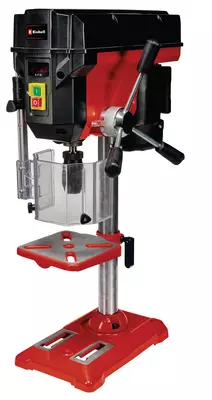
A pillar drill is best suited for drilling into metal
For hard materials, it is important to drill at the correct angle. That’s why it is recommended to use a pillar drill instead of a conventional drill. With a pillar drill, it is easy to drill holes precisely at a 90° angle. Unlike wood, metal does not forgive crooked drill holes. In addition, pillar drills offer various options, such as a machine vice, for securely clamping the workpiece. A pillar drill is particularly useful when drilling into metal pipes.
Beware of metal shavings
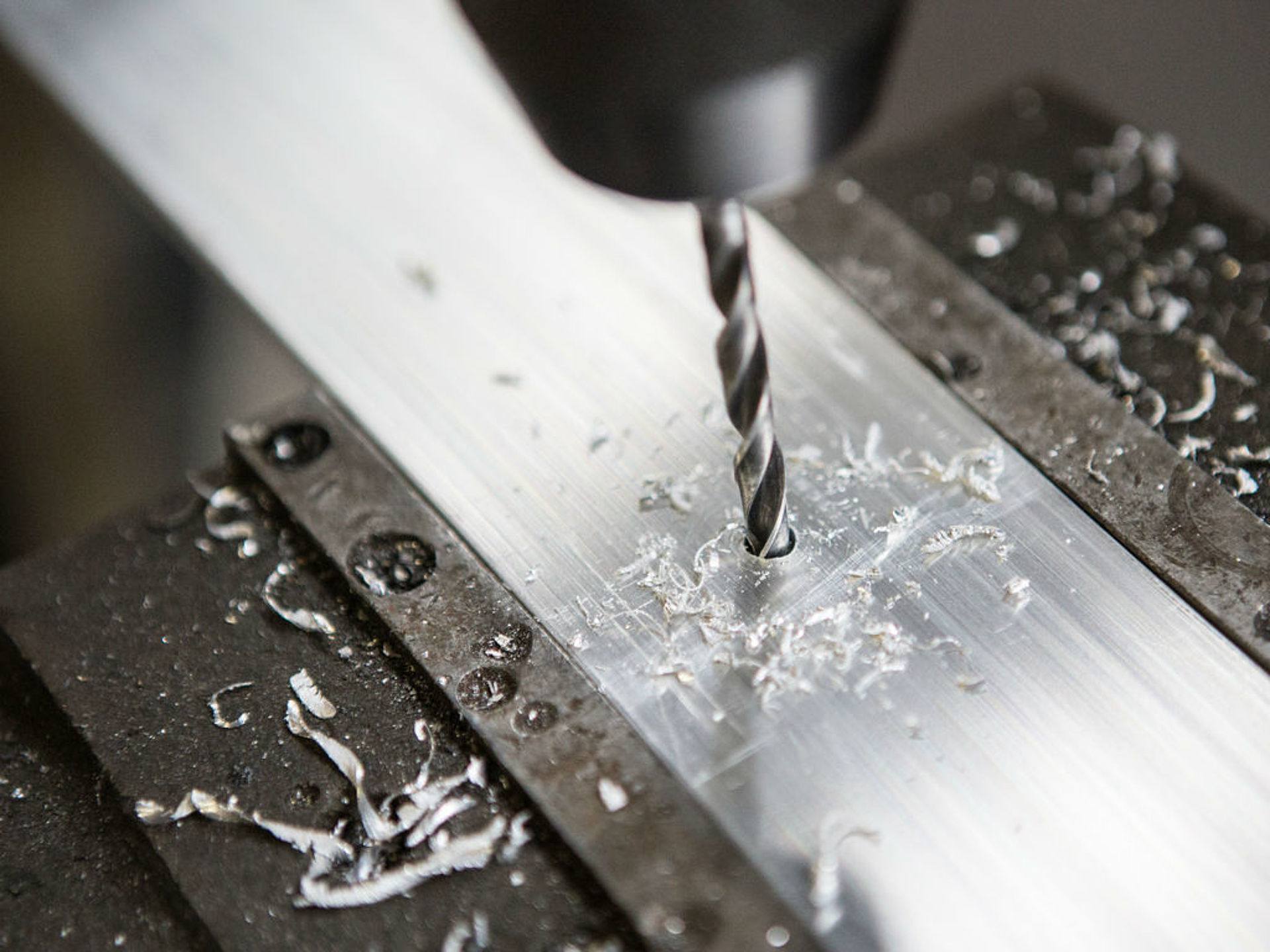
When drilling into metal, long, continuous shavings are produced — and they can be dangerously sharp. If they become too long, centrifugal force can fling them outward. Our tip: briefly reduce the pressure while drilling. This breaks the shavings before they can become a hazard.
The right preparation
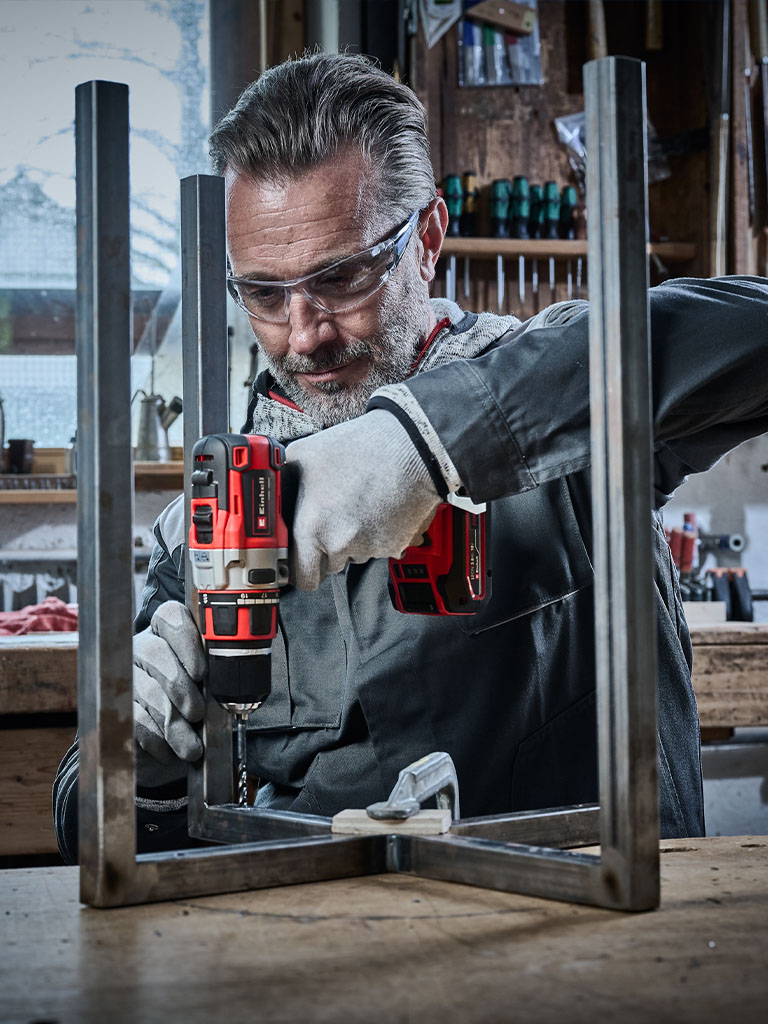
Center-punch the drill holes
We recommend center-punching the planned drill holes with a center punch and hammer before positioning the drill. This helps prevent the drill bit from slipping, making the holes more precise and easier to drill. Center punches are available in various sizes and hardness levels at your local DIY store.
For large holes, it’s better to pre-drill
If you want to drill larger holes, it is a good idea to pre-drill them first using a smaller drill bit. Drill bits with a large diameter tend to slip quickly when entering the material directly. The smaller pre-drilled hole guides the drill bit through the material and also helps reduce temperature-related stress.
Step drill bit
Large holes can also be finished effectively with a so-called step drill bit. A step drill bit is a conical drill bit with several “steps” in different diameters. With a step drill bit, the hole diameter is determined by how deep the drill bit enters the material.
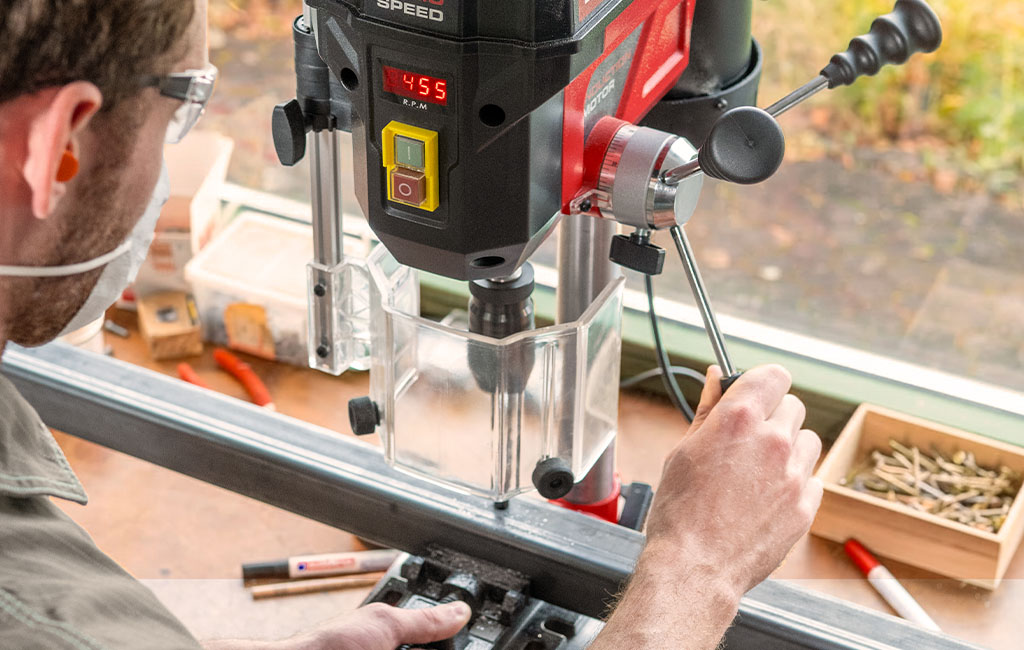
With a pillar drill and the right tips, you’ll be perfectly prepared for drilling into metal.
Apply cutting oil to the drilling points
As soon as you are drilling into metal that is thicker than sheet metal, you should definitely apply a small amount of cutting oil to the drilling point. Cutting oil cools both the workpiece and the drill bit, while also helping to prevent the drill bit from becoming dull too quickly.
The right finishing steps
Deburr or countersink after drilling
Since the edge of the drill hole is very sharp, you should always deburr it with a countersink. This helps prevent cuts to your hands. If you plan to use a countersunk screw, it is also recommended to finish the hole with a countersink so that the screw head sits flush with the metal.
Countersinks are divided into conical countersinks and cross-hole countersinks. A conical countersink has two to three cutting edges and a cone-shaped design. A cross-hole countersink, on the other hand, has a round head. Compared to conical countersinks, cross-hole countersinks are less prone to chatter and therefore produce a better surface quality.

Published on 09.02.2018
Whether it's the garden or the workshop, Hauke Leweling is a true all-rounder and a freelance blogger. For Einhell, Hauke is armed not only with pen and paper but also with various gardening tools and equipment that he thoroughly tests. He shares his experiences, as well as tips and tricks, in his blog posts.