


In this article you will learn all about:
Definition: What is "mulching"?
When we talk about "lawn mulching", we basically mean spreading grass cuttings directly onto the mowed lawn. To achieve this, it is important that the grass is not just mown, but further shredded before being spread over the lawn as mulch.
The shredded grass forms a "mulch", i.e. a loose top layer of soil. Because the green cuttings are made of organic material, this process feeds natural nourishment back into the soil. Anyone wishing to reuse grass clippings directly on suitable lawn areas can leave them on the lawn area whilst performing mulching. Whether additional fertiliser is required depends, amongst other things, on the soil, the condition of the lawn and how it is used.
Grass clippings as nutrient source: How mulching works
In general, mulch refers to a layer of organic material which is applied to the soil. Depending on the type and purpose of the mulch, different materials can be used. These include shredded grass, leaves, chopped branches, twigs and waste wood, straw or stones. One of the most well-known is bark mulch, which is made from chopped tree bark. The layer of mulch helps to protect the soil surface. Whether it’s cold, hot or very sunny: the layer of mulch can help regulate temperature and help protect against moisture loss and drying out. Depending on the location and weather conditions, this can create better conditions for even lawn growth.
When mulching, the finely chopped grass clippings are left directly on the lawn. This thin layer of material serves to protect the soil from drying out and, as it breaks down, releases important nutrients such as nitrogen, phosphorus and potassium. Under suitable weather conditions, this method can contribute to the nutrient cycle in the lawn.
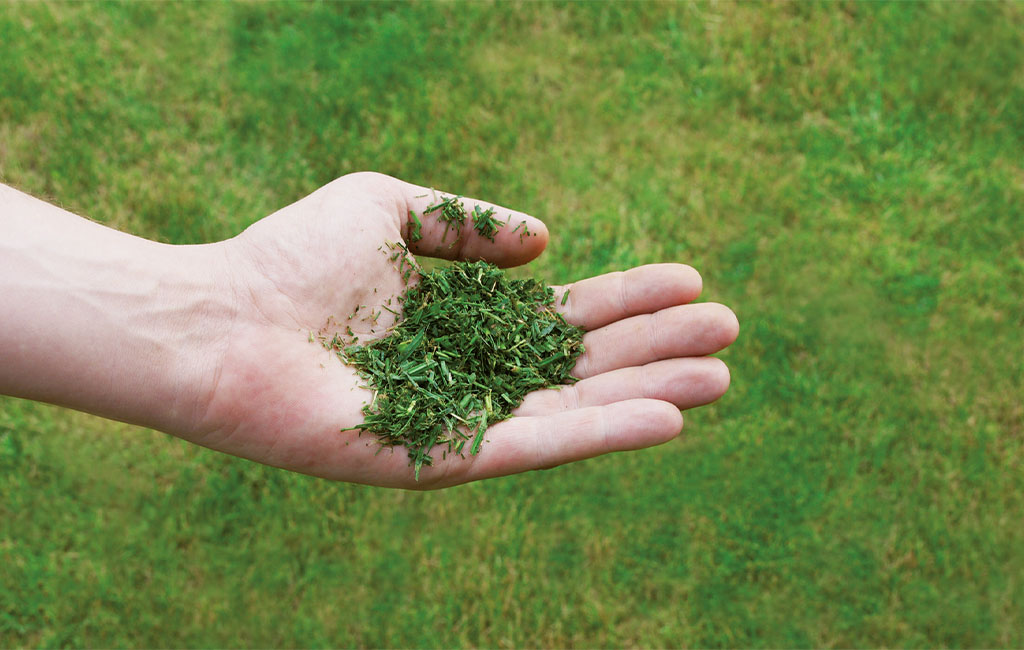
Finely chopped grass clippings can be used as mulch on suitable lawn areas.
How often and when should you mulch?
Consistency is particularly important when mulch mowing. Ideally, the lawn should be mowed and mulched approximately every 7–8 days. It is important to ensure that the grass is not left to grow too long, as too much mulch spread over the ground could deprive the soil of oxygen and cause it to suffocate. If too much grass is cut at once, it usually cannot be chopped up finely enough. However, the key point is: the finer the clippings, the more easily they can be distributed and decompose.
As a rule, the grass should be mulched regularly throughout the whole gardening season, in other words, from spring through to autumn, as long as it is also mown regularly.
Comparison: Mulching vs. mowing
In the world of lawncare, one question that is sure to divide opinion: Should you mow and mulch separately, or at the same time (i.e. mulch-mowing)? Both approaches have their benefits and drawbacks, and it is important to understand the differences so you can choose the best method for your lawn.
Different ways of working
- Mowing: With a typical mower, you trim your lawn, and collect the grass clippings in the grass collector. Afterwards, you can either dispose of the grass clippings, or put them to compost.
- Mulching: Mulching involves shredding cuttings such as grass, leaves, branches and so on and spreading them as a layer on top of the soil. To do this, you would either use a mulch-mower or a shredder.
- Mulch-mowing: Mulch-mowing combines three steps into one, since as you are mowing your lawn, the green cuttings are chopped inside the mulch-mower and then not fed into the grass collector, but instead ejected directly onto the lawn. In actual fact, you are doing three jobs at once: mowing, shredding and mulching.
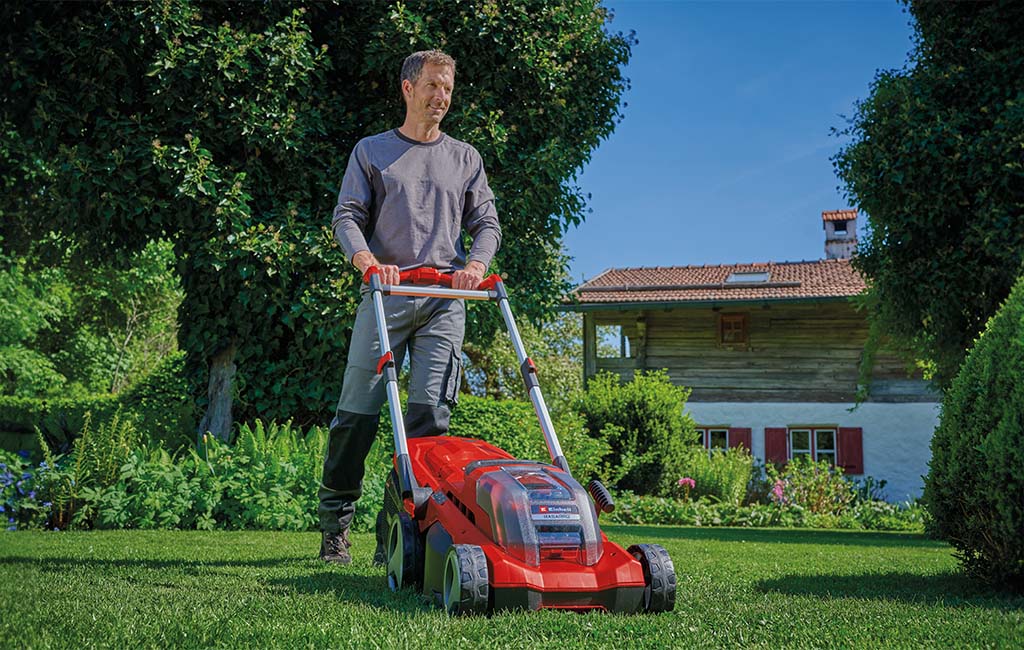
Mulching and mowing at the same time? That's no problem with a lawn mower with mulching function!
The right equipment for mulch-mowing
Not every lawnmower is suitable for mulch-mowing. To chop the cut grass even finer inside the lawnmower, it needs to have a mulching function. This serves two purposes: firstly, it ensures that the grass is "shredded" into small pieces, and secondly, it spreads the cuttings directly onto the lawn. This also means that you can mow without attaching a grass collector. For example, in addition to our specialised models of mower, all of our robot lawn mowers are also mulch-mowers.
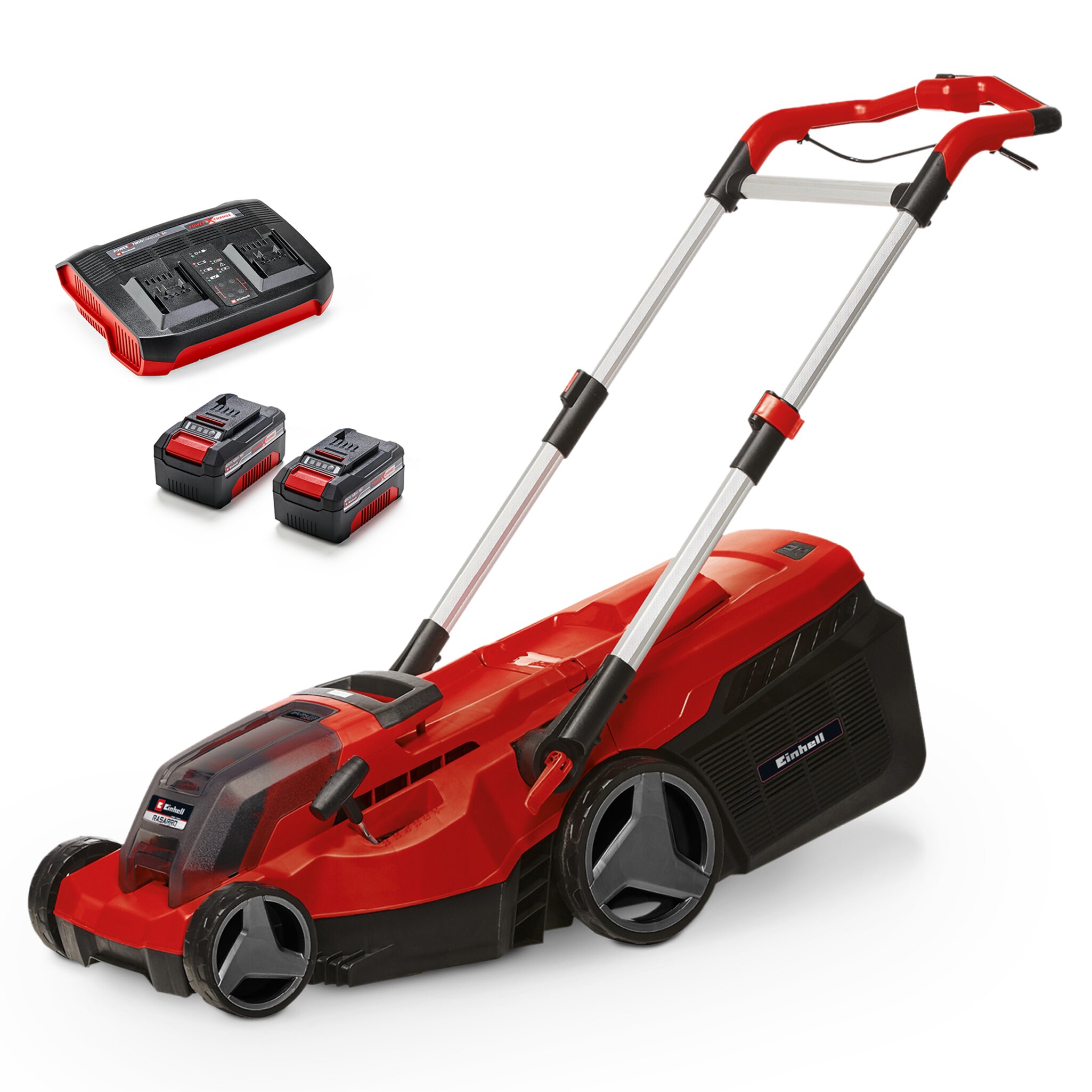
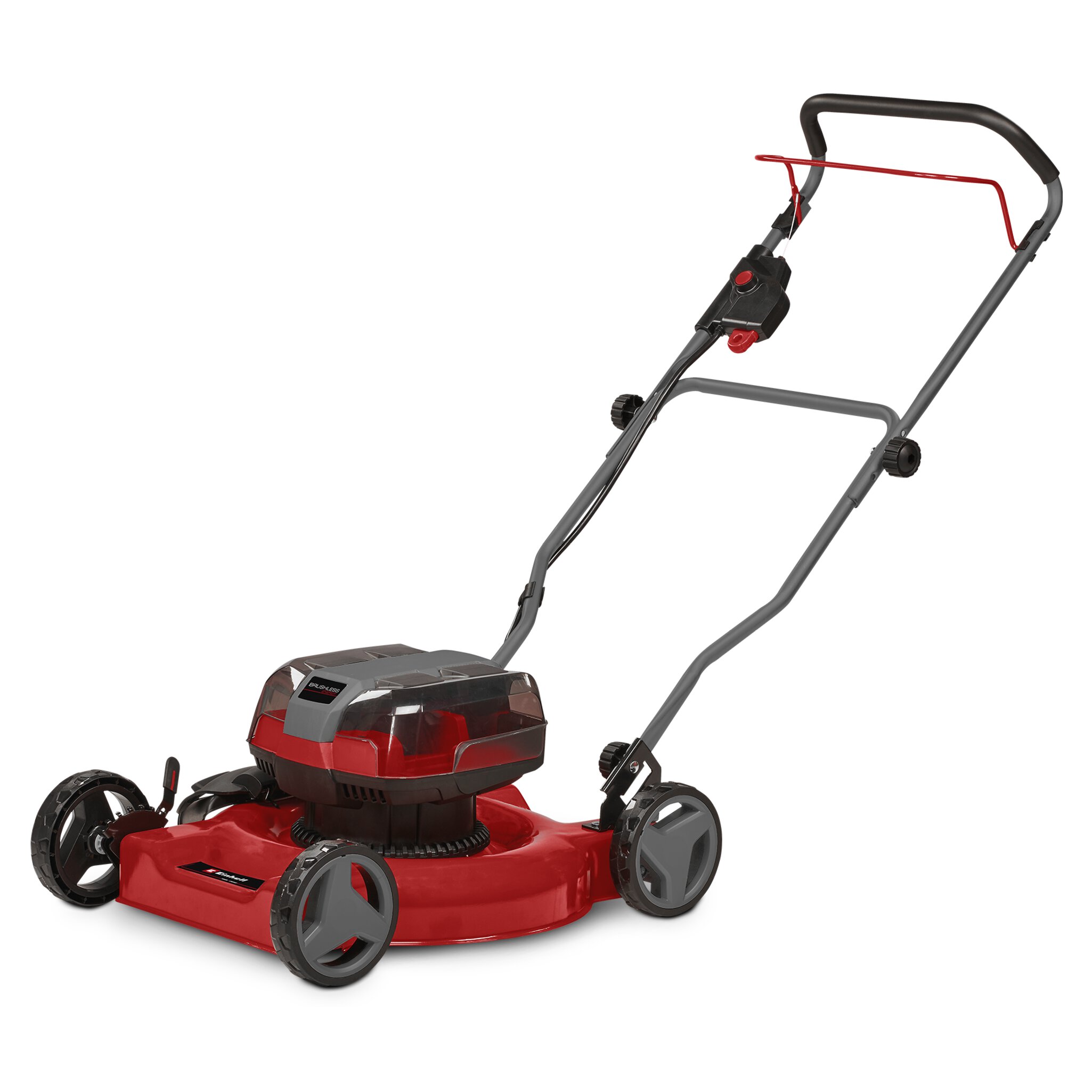
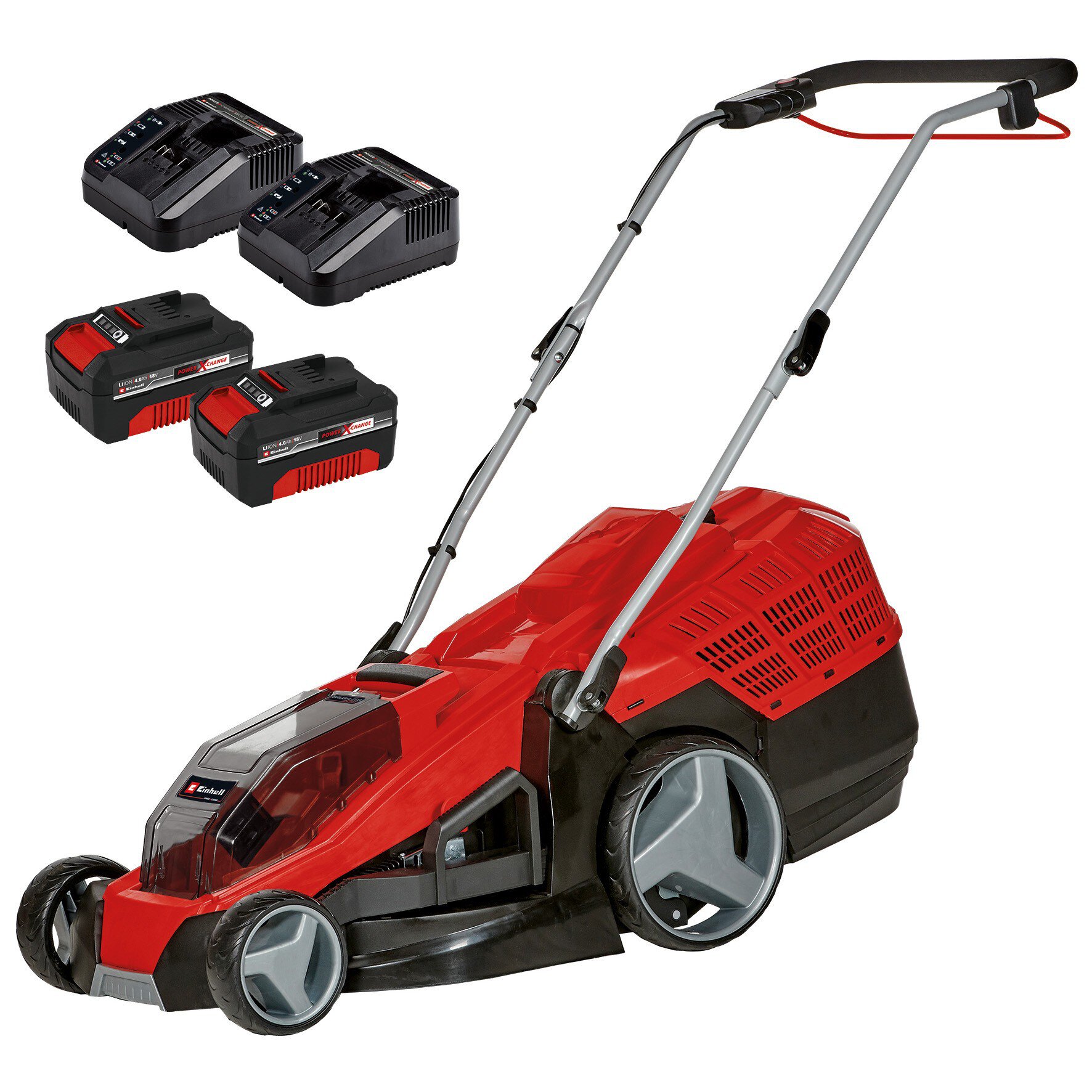
Here are some garden tools you can use for mulch-mowing:
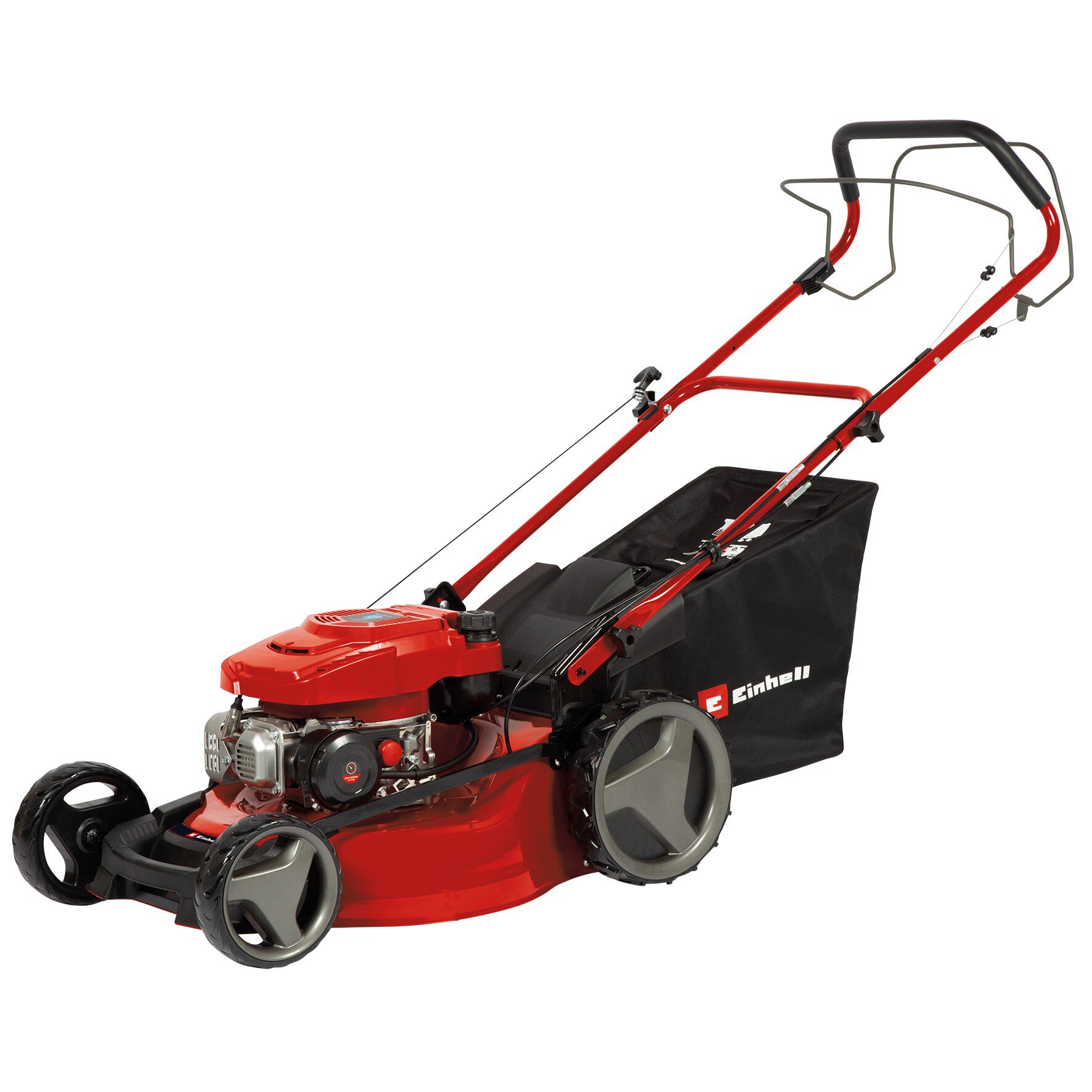
- Lawnmower with mulching kit: Certain models, such as the cordless lawnmowers RASARRO 36/38 and GE-CM 36/43 Li M, and even our petrol lawnmower GC-PM 51/3 S HW, come with a mulching plug or mulching adapter. When this is installed in the lawn mower, it ensures that the clippings remain in the mower body longer and are chopped finer. By installing the mulching adapter and putting the grass collector to one side, the lawn mower can be converted into a mulch-mower at any time.
- Cordless mulch-mower: The cordless lawn mower GE-CM 36/48 Li M does not come with a grass catcher. It is a pure mulch-mower with a robust sheet-steel chassis.
- Robot lawnmower: All Einhell robot lawnmowers can be considered mulch-mowers because they leave the grass clippings on the lawn. For mulching, the mower should run regularly, e.g. every day. This way, it only trims off short pieces of the blades of grass, which means they do not need additional shredding.

Benefits and drawbacks
To help you decide whether you prefer to mow your lawn normally or mulch it regularly, we have summarised the advantages and disadvantages of each method.
Lawn mulching / Mulch-mowing
Advantages
- Nutrient recycling: The soil is naturally replenished with its own nutrients from the grass clippings produced when mowing the lawn.
- Protective layer: A thin layer of mulch can shade the soil surface and reduce evaporation, preventing the lawn from drying out too quickly.
- Savings: Depending on nutrient requirements and soil condition, the need for additional fertiliser may be reduced.
- Less waste: By recycling the grass directly in the garden, there is no longer any need to dispose of the clippings separately.
Disadvantages
- Consistency: The lawn must be mulched and mown regularly, to avoid too much mulch accumulating at once, and allowing time for the mown grass to be broken down.
- Risk of lawn thatch: If the grass is too tall when it is mown and used as mulch, lawn thatch can form. However, this can be removed again by scarifying.
- Soil suitability: Mulching is not suitable for all soils, e.g. sandy and loamy soils, or areas in a lot of shade.
Lawn mowing:
Advantages
- Flexibility: When just mowing the lawn, you don't have to follow exact intervals. The cutting height can be adjusted depending on the length of the grass, so you can even mow just once a fortnight.
- Visual appearance: The lawn looks tidier, because the grass clippings are neatly collected in the grass collector.
- Compost: The cut grass is perfect for composting.
Disadvantages
- Extra care: On areas where cuttings are regularly removed, supplementary fertilisation may be advisable. Whether this is necessary depends on the site conditions. This fertiliser must be applied separately, unlike with mulching, where both steps are carried out at the same time.
- Lack of protection: The lawn is left unprotected against the sun and the weather and can dry out more quickly in hot, sunny conditions.
How-to and tips: What you need to look out for when mulch-mowing
If you want to use the grass clippings as mulch, you no longer need to worry about disposing of them. If you stick to the traditional mowing method, you can also add the grass clippings to your compost so that they break down into usable fertiliser for the next gardening season. We explained in another blog post which other garden waste can be composted and some useful ways you can recycle it.
If you opt for regular mulching, there are a couple of things you should keep an eye out for.
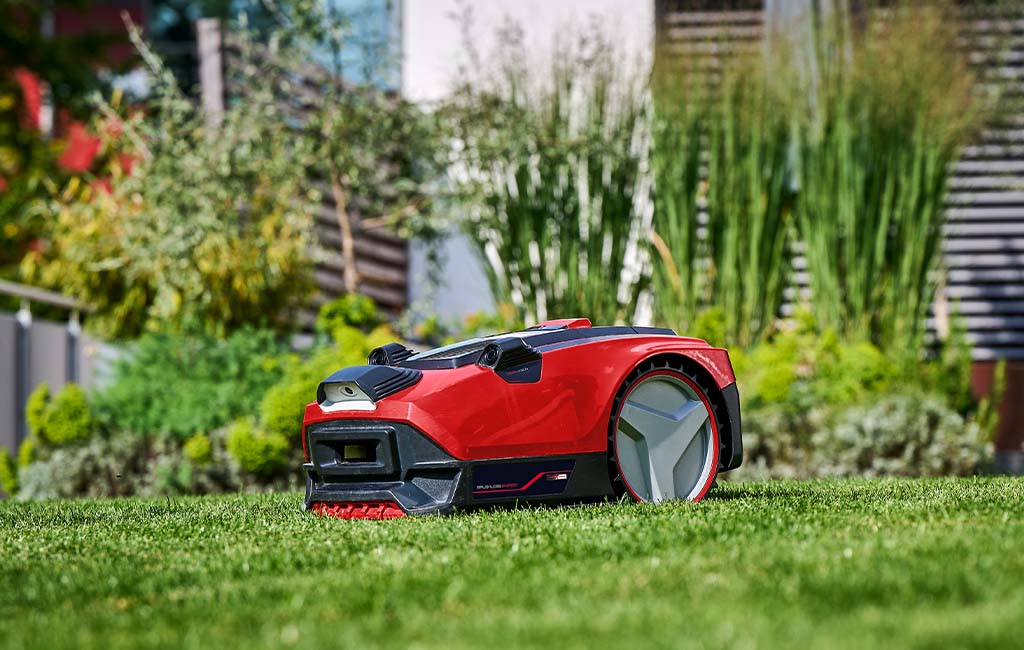
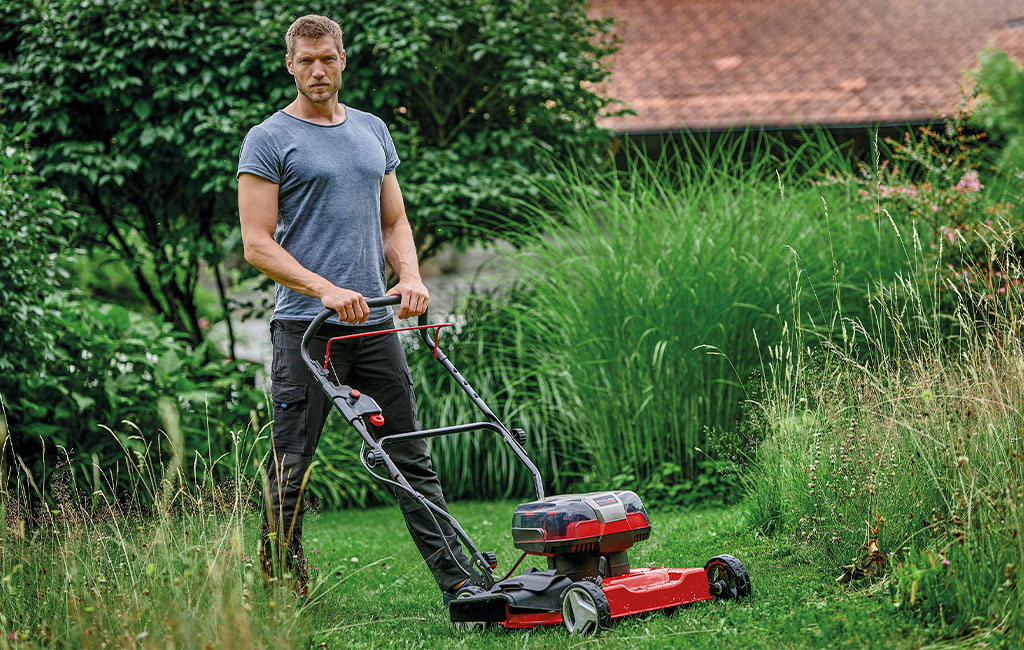
Due to its regular, mostly daily mowing rhythm, the robotic lawnmower automatically mulches the lawn.
The recommended cutting height of your lawn
If you spread too much mulch, or the grass clippings are chopped too coarsely, the mulch layer may "suffocate" the soil below. The cuttings deprive the blades of grass of light and air to breathe. This increases the risk that your lawn will dry out and develop brown patches or even form lawn thatch. For a lush, green and well looked after lawn, you should therefore make sure not to cut too much off the grass, and to shred the clippings very finely, either by using the mulching function of your lawn mower, or the frequent mowing schedule of your robot lawn mower.
The amount you should take off always depends on the weather and the grass itself.
- Recommended mowing time: when the grass is 6 - 7 cm tall
- Recommended cutting height: trim to 4 - 5 cm
- Exception for shaded lawns: at 8 cm tall, cut to max. 5 cm
By shaded lawns, we mean those lawns which receive little or no sunlight. Without the UV rays (and because of the lower temperatures) the grass grows more slowly and should therefore not be cut as short. By the way, in temperatures below 12 °C or above 28 °C, grass usually grows slower, if at all. Also, the more it rains, the faster the grass grows.
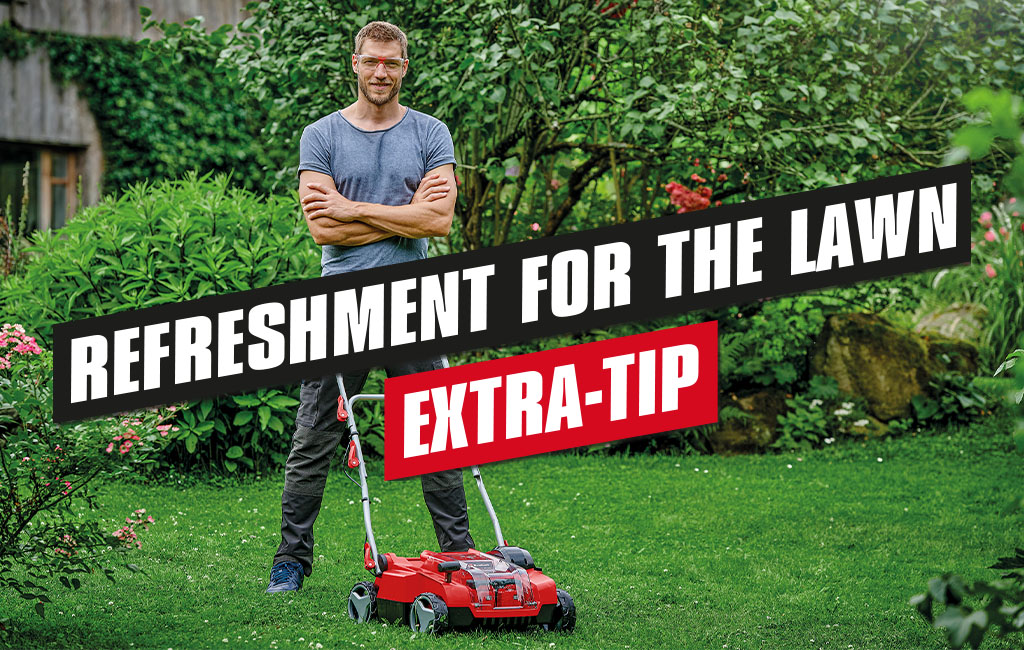
EXTRA TIP
If you mulch your lawn very frequently, you can give it a "refreshing treatment" in autumn and spring by scarifying it. This removes old cuttings from the lawn so that it can breathe better and absorb new nutrients. Want to learn more about this? Then you will find this blog post interesting.
Check the weather: avoid mulching with wet grass!
If at all possible, you should avoid mowing the lawn when it is wet, and you should not use it as mulch. The wet grass clippings stick to the mower housing and form clumps. When these are spread onto the lawn, they will dry more slowly, which can lead to rotting and decay.
When is mulching not recommended?
Mulching can be a suitable method of lawn care in many gardens. However, there are cases where mulching is not recommended:
- Heavy, impermeable soil: In heavy or heavily compacted soils, grass clippings may decompose more slowly. If the mulch remains on the lawn for too long, it can put a strain on the grass and encourage the formation of thatch.
- Sandy soil: Very sandy soils often retain water and nutrients less effectively. Therefore, mulching alone is not always sufficient to provide the lawn with adequate nourishment. Depending on the condition of the lawn, additional care or fertilisation may be advisable.
- Shaded lawns, areas with high rainfall: On shaded or frequently damp lawns, grass clippings dry out more slowly. This can cause the mulch to clump together or decompose less effectively. In such cases, thatch, moss or rot can develop more easily.

Published on 14.06.2023
Marina Liefke is an Online Editor at Einhell, where she deals with virtually all texts related to tools, garden equipment, and accessories. She acquires the necessary know-how through practical product training and close collaboration with the Einhell product managers. Her favorite tool is the PRESSITO cordless compressor because when the air is running out, it pumps it right back in.