

In this article you will learn all about:
The impact drill
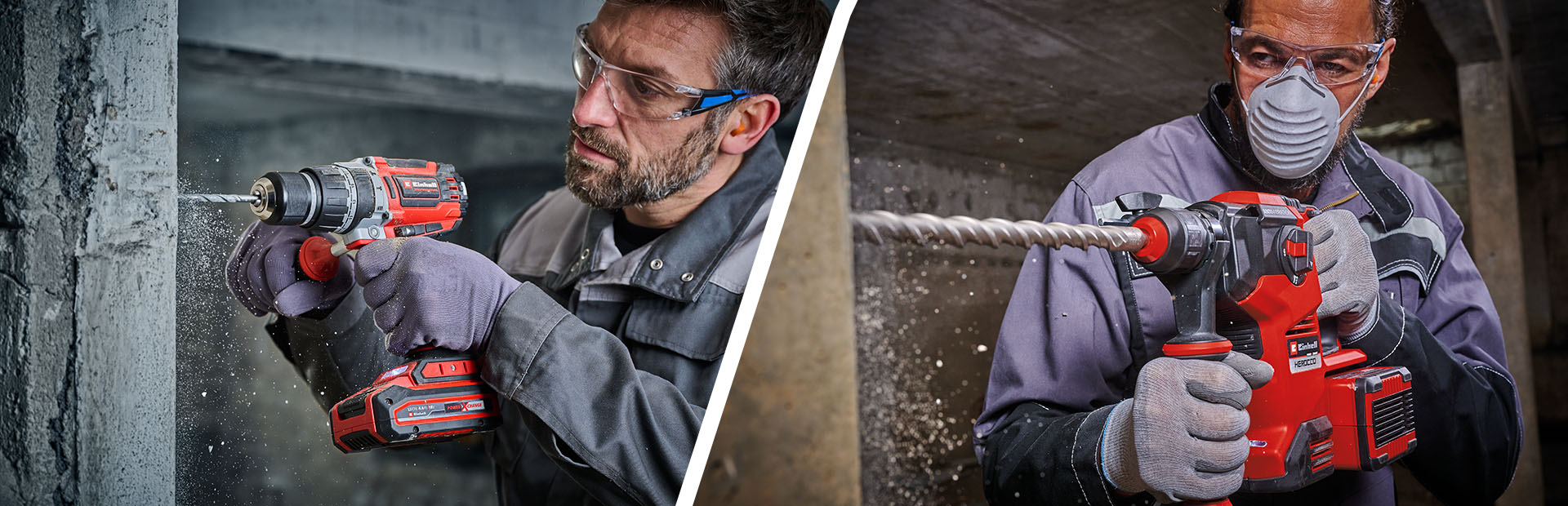
As already mentioned, the impact drill is a universal tool that can be used both for drilling with and without impact, as well as for driving screws.
Thanks to its mechanical impact mechanism, the inserted drill bit is set into vibrating movements — the actual impact. The impact drill generates the impact purely mechanically through the arrangement of the gears in the transmission. The impact function of the impact drill can be completely deactivated via a switch when drilling into wood or plasterboard. This makes it possible to use the impact drill as a classic drill as well.
❗When drilling into hard materials, the impact drill requires an enormous amount of force, unlike the rotary hammer. Since the impact is generated purely mechanically here, the impact drill lacks the actual forward drive. This missing forward drive must be provided by the user in the form of pressure on the machine. Compared to the rotary hammer, the impact drill has a much higher impact frequency and therefore also produces more noise. When working with an impact drill, you should never go without suitable hearing protection.
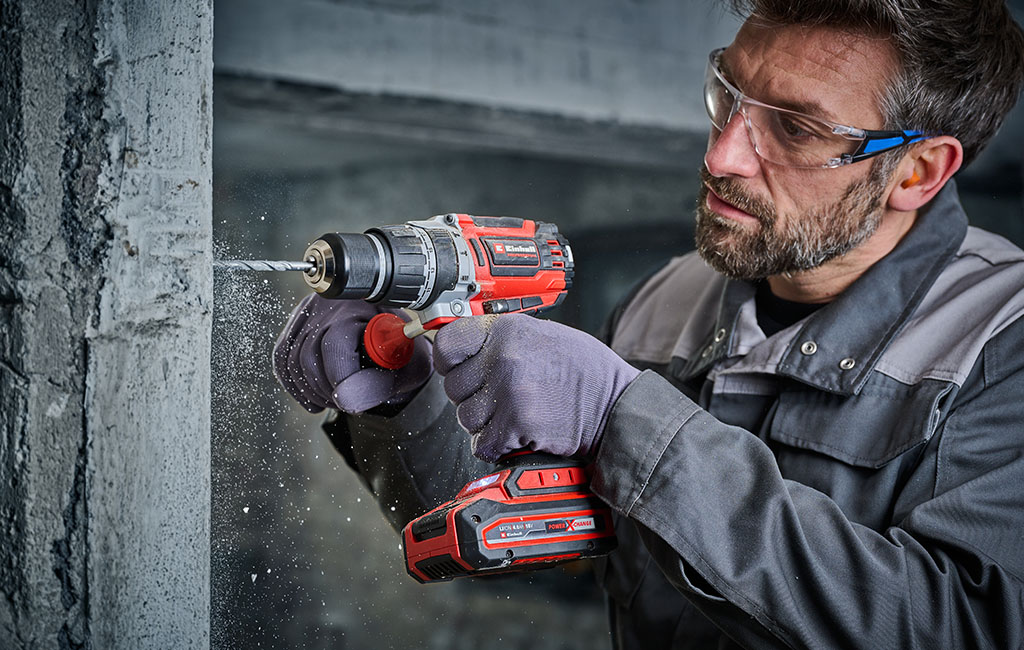
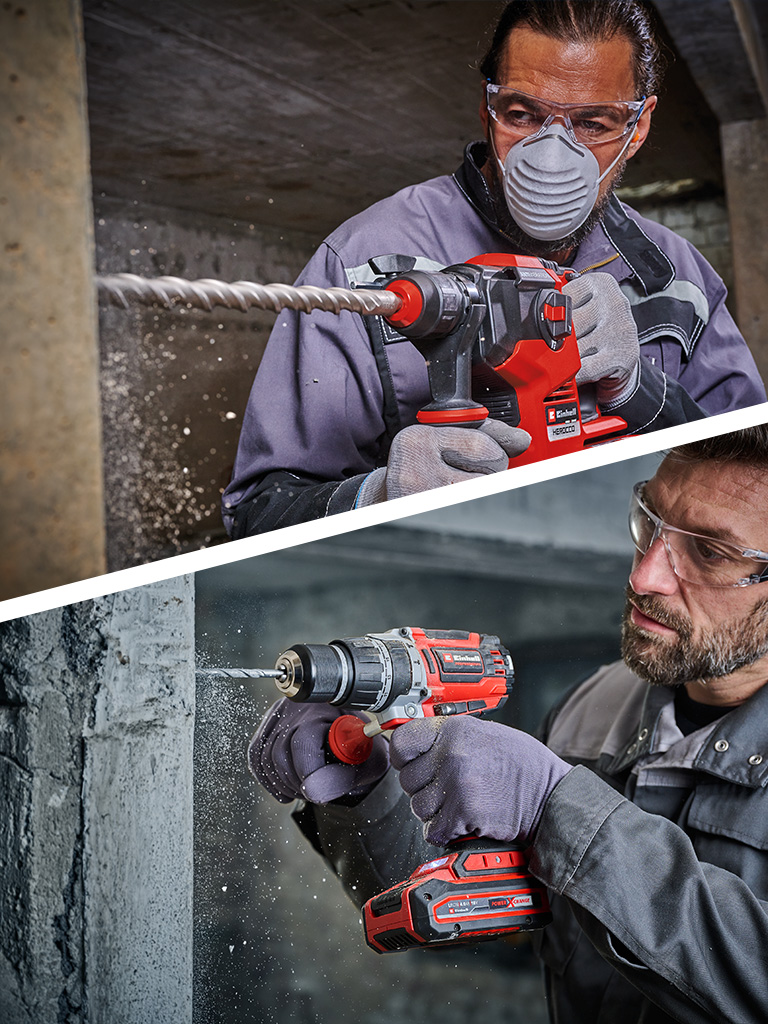
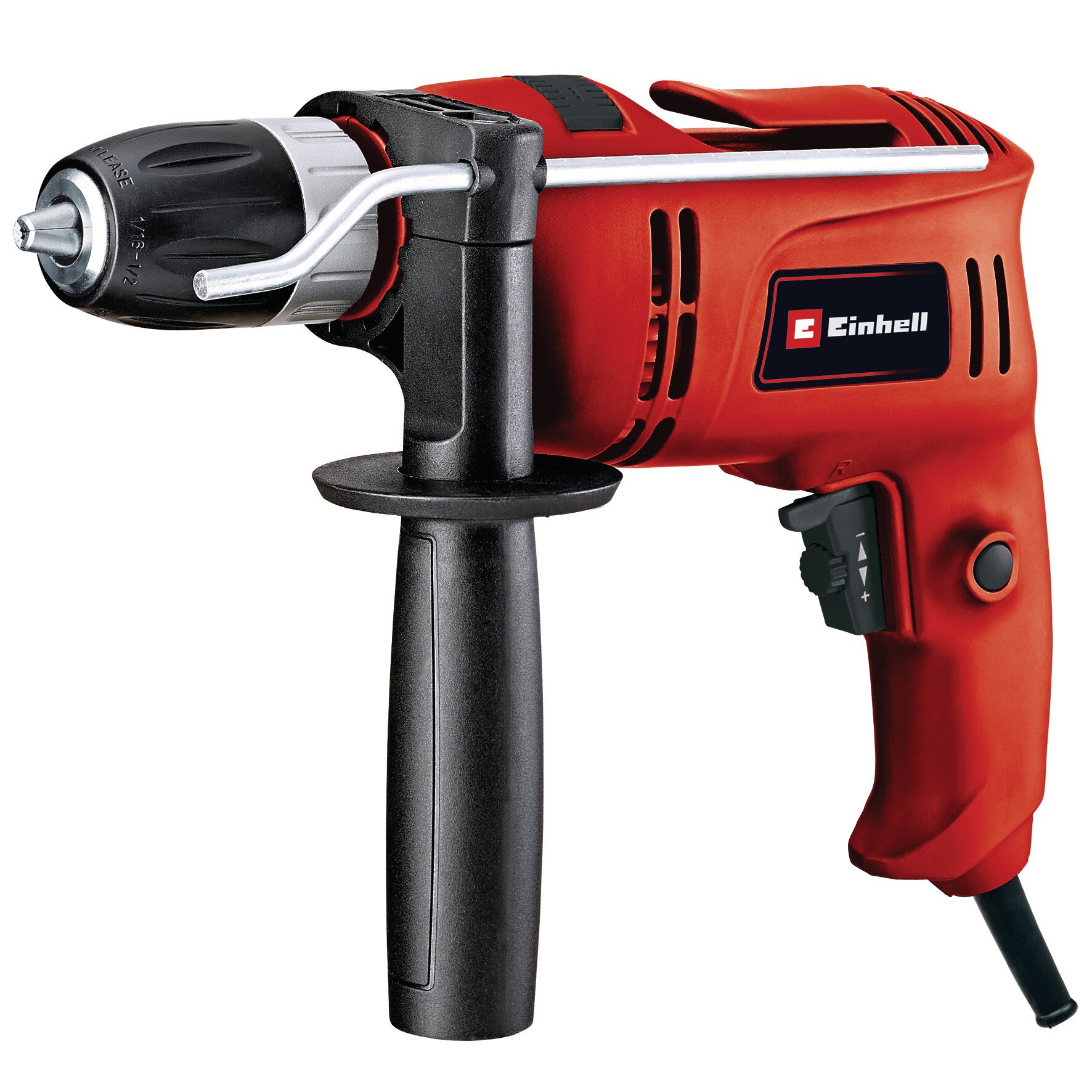
The cordless impact drill is suitable for drilling, impact drilling and screwdriving, but requires more pressure and suitable hearing protection when working on hard materials such as concrete.
The rotary hammer
In contrast to the impact drill, the rotary hammer has an electropneumatically driven impact mechanism.
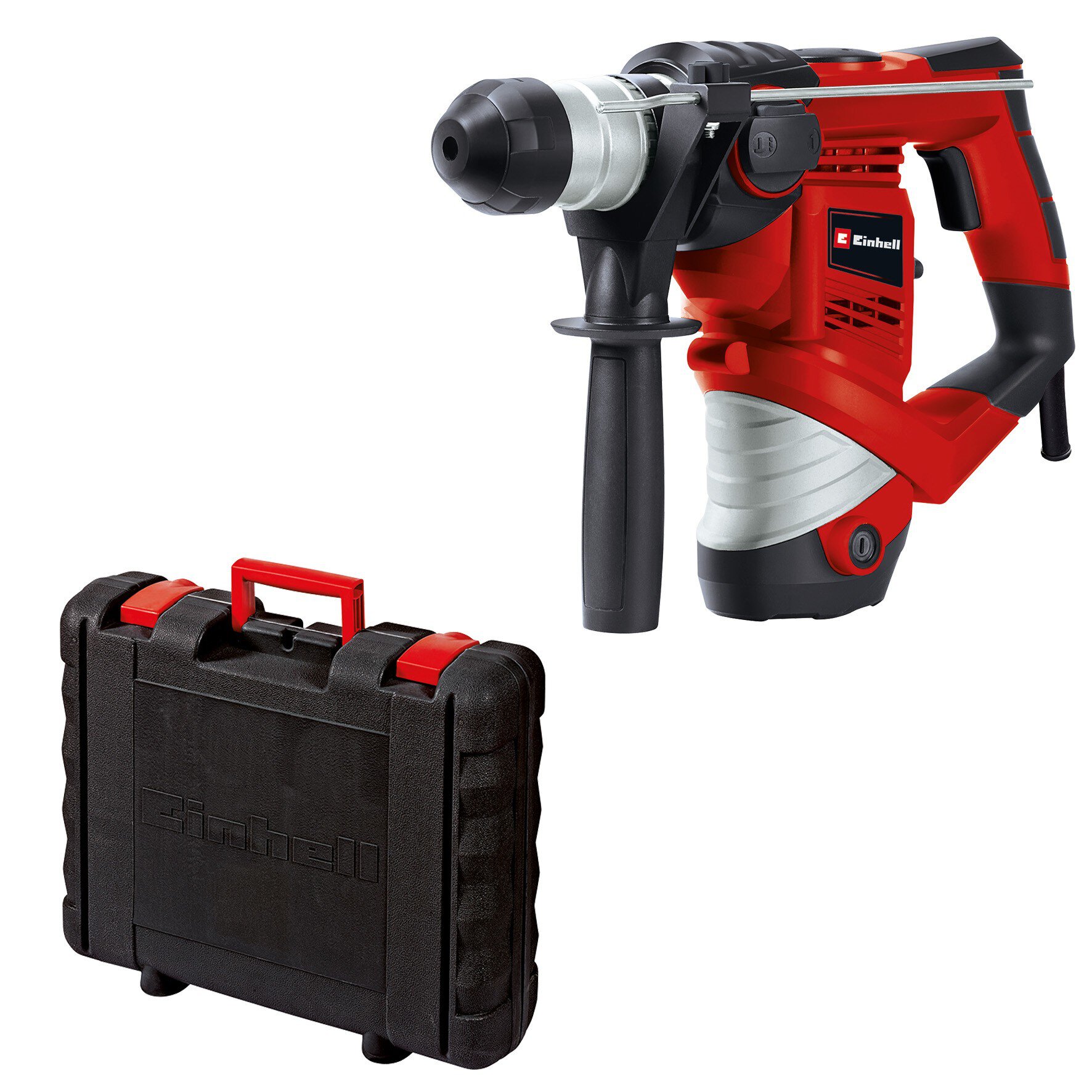
The rotational movement of the electric motor is diverted via the drive bearing and a piston into a lifting movement. This distributes the resulting negative pressure through the so‐called mallet in the direction of the clamped drill and thus produces an axial movement. Despite their lower power consumption and lower impact frequency compared to impact drills, rotary hammers are far superior to them due to the different concept of impact force.
Thanks to its electropneumatic impact mechanism, the rotary hammer drives the drill bit almost independently into the wall. The effort required here is extremely low and focuses primarily on positioning the rotary hammer at the correct angle in front of the wall and holding it in position.
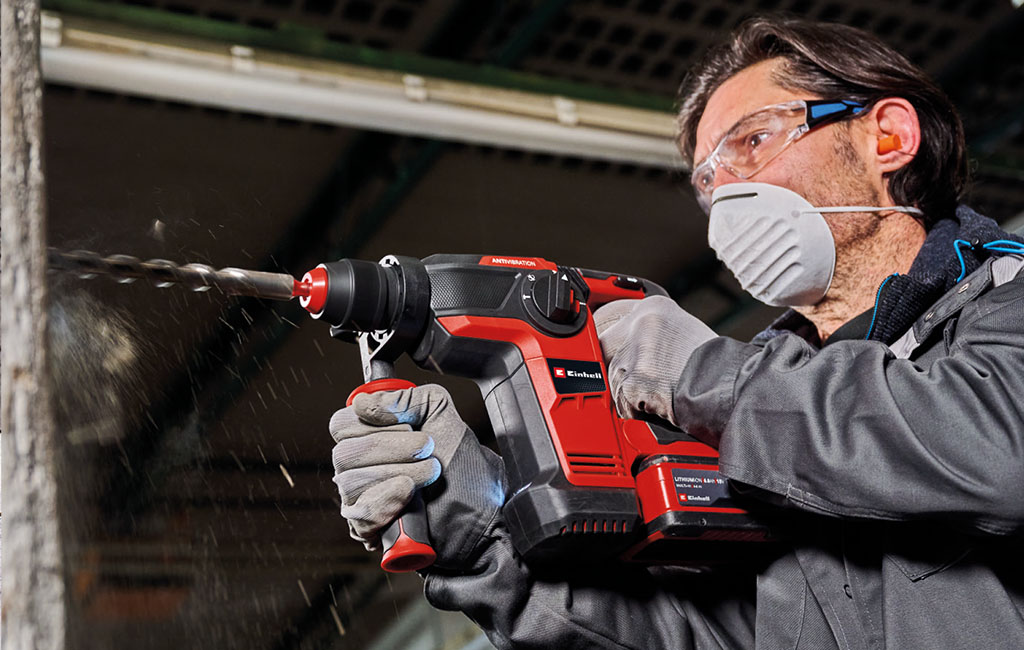
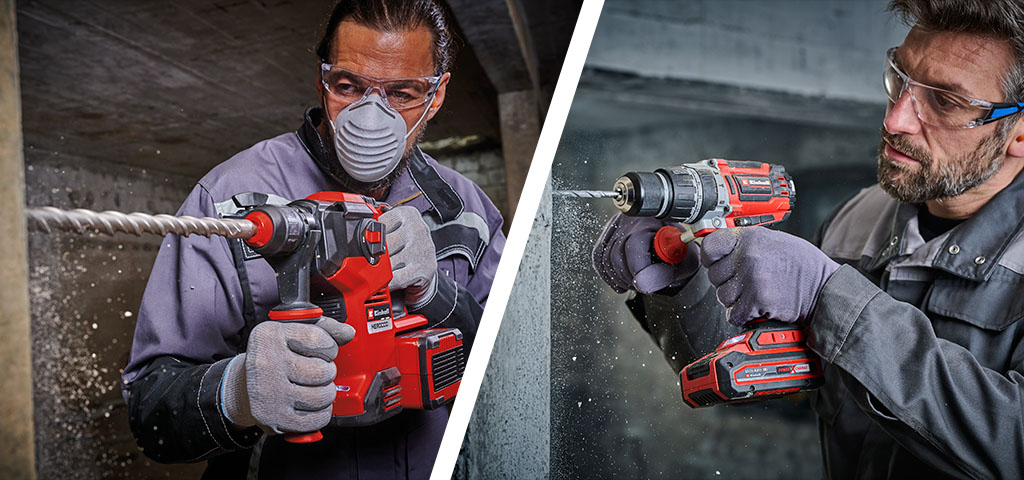
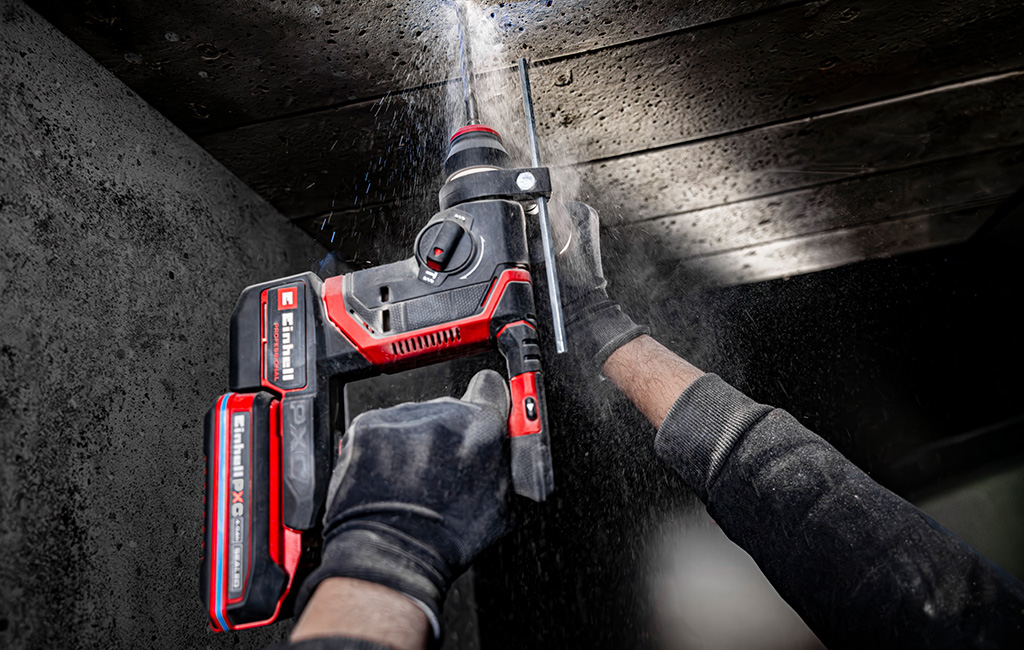
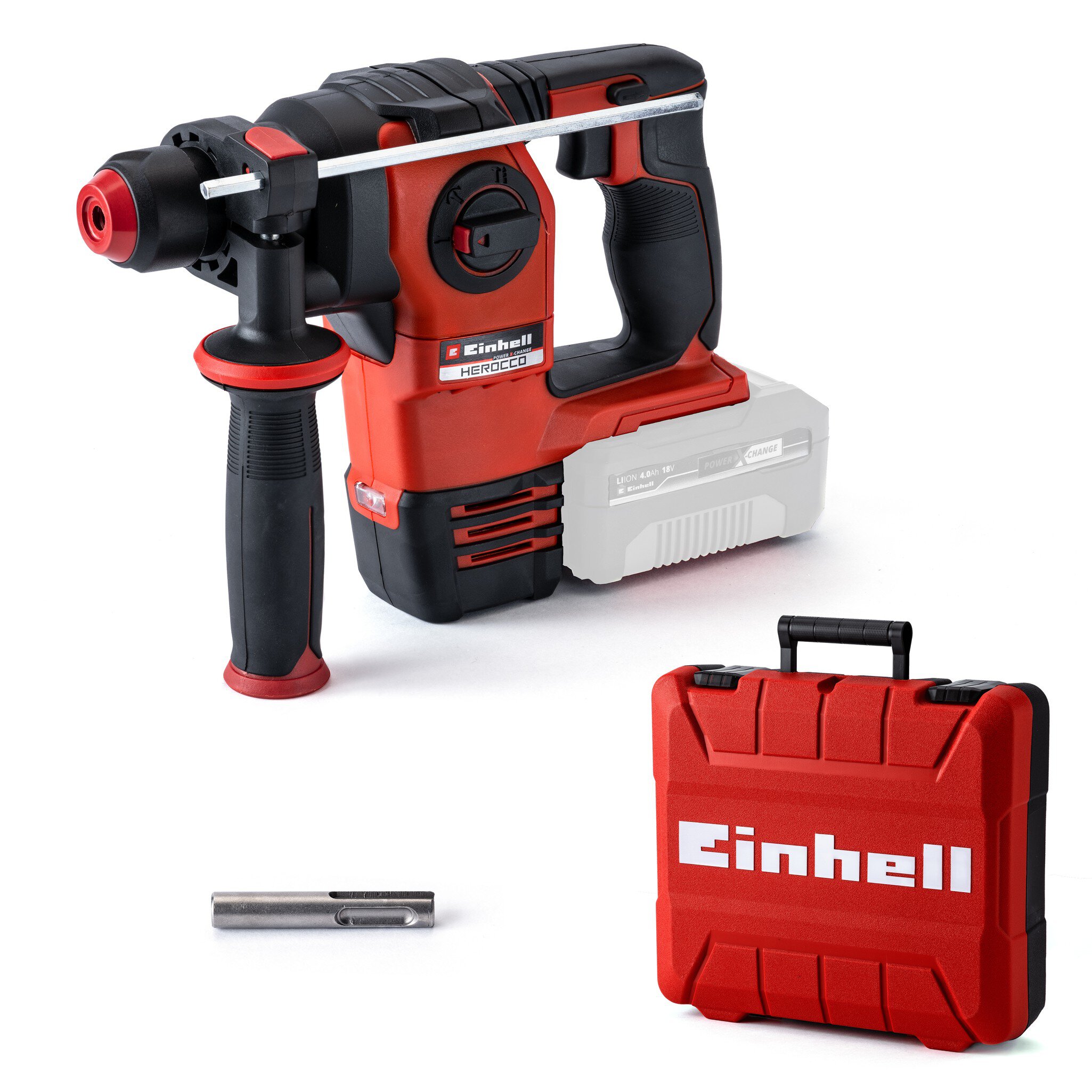
The cordless rotary hammer uses an electropneumatic hammer mechanism to drill into hard materials such as concrete with high impact force and minimal pressure from the user.
Chiselling with the rotary hammer
In addition to drilling holes in stone and concrete, a rotary hammer can also be used for chiselling work, such as removing tiles or even removing an entire wall. For this purpose, a chisel is inserted in the SDS holder of the chuck instead of a drill bit. The rotation movement necessary for drilling can be completely deactivated using a switch on the device. The rotary hammer thus becomes a light caulking hammer, which drives the chisel tip independently into the ground. Chisels for the hammer drill are available from specialist dealers in different lengths and with different tips.
Thanks to the standardised SDS system, which allows fast tool‐free change of drill bits and chisels, it is easy to use drill bits from any manufacturer. The SDS or SDS‐plus system allows the drill bit a small amount of lateral play and thus ensures perfect holes in the wall, as slight changes in the angle of attack of the hammer are not significant.

The rotary hammer can also be used with a chisel for light demolition work, such as removing tiles
Accessories
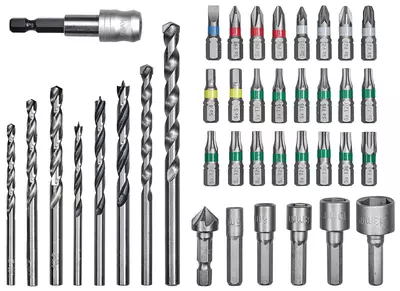
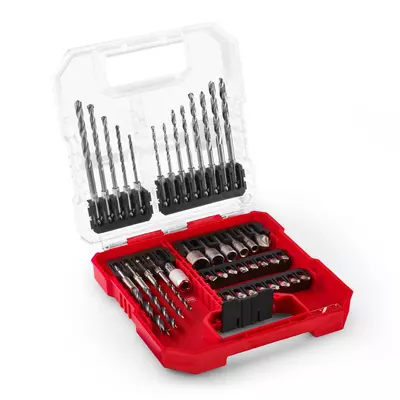
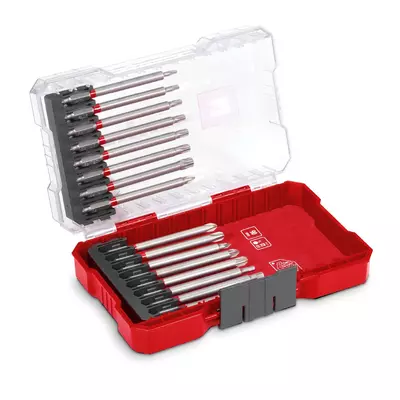
In addition to standard drill bits and chisels, a wide range of accessories are available for the rotary hammer in the specialised trade. For example, with diamond‐coated core drill bits for drilling socket holes or classic chucks to work with conventional drill bits.
Rotary hammer or impact drill?
Anyone struggling with the question of which type is the right one should consider how often and what material they want to drill into.
You should choose a rotary hammer if:
- the answer to the question about the material points toward hard concrete.
- you already own a powerful cordless screwdriver and therefore do not depend on being able to use the drill for screwdriving as well.
You should choose an impact drill if:
- working with concrete is more of an exception in your projects. However, for frustration-free work, the impact drill should have a power input of at least 650 watts.
Conclusion
Whether a rotary hammer or an impact drill is the better choice depends primarily on the intended application. While the impact drill stands out as a versatile all-round tool for wood, metal, or occasional work in masonry, the rotary hammer shows its strengths particularly with hard materials such as concrete and during chiseling work. Anyone who regularly drills into concrete or wants to work with less effort is well advised to choose a rotary hammer.

Published on 06.11.2018
Whether it's drilling, hammering, or sanding, our professionals in the workshop and DIY field will show you how it's done. Tobias Guttenberg is a freelance blogger and a passionate craftsman. With his tips and tricks about Einhell tools, you will not only become an absolute DIY expert but also learn how to safely use each device.