


In this article you will learn all about:
Important safety measures when dealing with circular table saws
Not only for the unexperienced, but also for ambitious and experienced DIYers, working with the circular table saw involves considerable risks. So, it's important that you work with the saw very carefully and with concentration to avoid serious injuries due to carelessness. If you have no experience with the saw, read the operating instructions before starting to work with the saw. The following tips for working with circular table saws are particularly helpful:
- Your circular table saw should always have a firm base under its feet, not wobble and stand up straight.
- Use the saw to cut different types of wood lengthwise or crosswise. Sawing other materials, firewood and round wood, on the other hand, is absolutely to be avoided and involves many risks.
- Adjust the cutting height of the saw so that you cut straight through the workpiece. Otherwise the cutting edge will not be as clean and the saw blade will become visible, and you could accidentally reach into it.
- If the distance from the workpiece to the saw blade is less than 120 mm, use a sliding block to guide the workpiece. If the distance is less than 30 mm, use a push stick to guide the workpiece towards the saw blade piece by piece without any risk.
- Do not place your hands on the workpiece in the area of the cutting line when feeding the workpiece. In addition, feed the workpiece in at a constant speed and constant pressure.
- Always remove workpieces or parts of workpieces in the area of the circular table saw blade with the push stick.
- The right saw blade also plays a decisive role: Only fit approved saw blades in your circular table saw to cut materials. Take particular care that the riving knife thickness and the saw blade thickness match.
- For your own safety, always wear mouth, ear and eye protection and tight clothing. You should avoid wearing gloves, as the fabric of the gloves can quickly get caught in the circular table saw. It is also advisable to use a collection container for pieces of material.
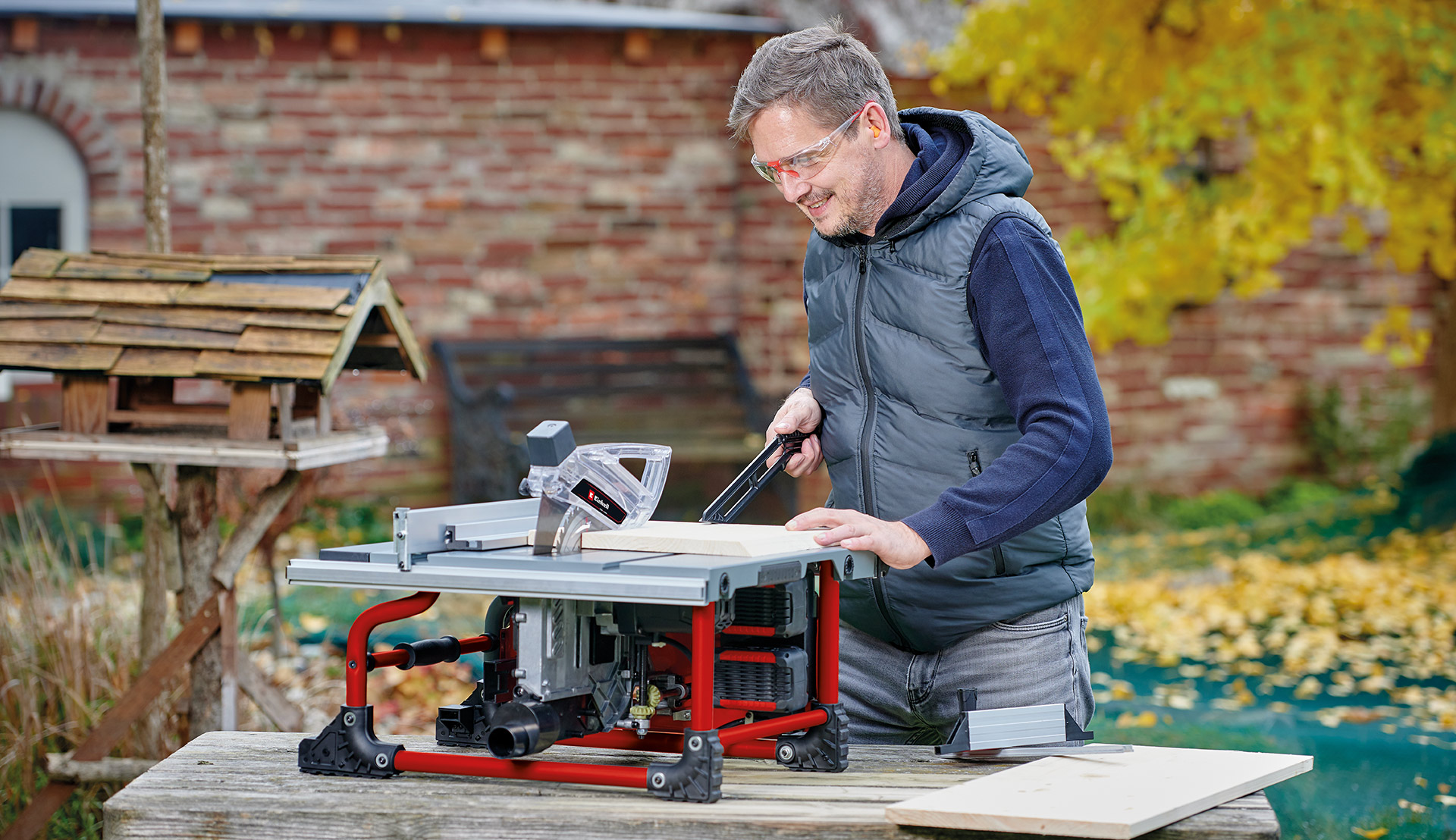
This way you can stay on the safe side when using the circular table saw.
When should I use which saw blade?
You will find a wide range of saw blades on the market. However, the saw blades vary considerably in their properties and are not automatically suitable for the exact workpieces you are working on. Basically, the finer the toothing of the blade, the more precise cuts you can make with your saw and the fewer tears there are in the cut edge. In addition, the teeth of the blades for woodworking must always be at a positive angle to the central axis and point downwards. So that you know which blade is best suited for your work, we will show you a short overview of the most common saw blades.
💡 In summary: The characteristics of the saw blade determine the working speed, cut quality, and service life of the blade.
Overview of Different Saw Blades
To help you choose the blade that is best suited to your work, here is a brief overview of the most common saw blades.
- Coarse-tooth saw blade for rip cuts: A saw blade with coarse, widely spaced teeth is ideal for rip cuts in solid wood. It allows you to make fast and efficient cuts because the large gullets provide plenty of space for chip removal. However, you should keep in mind that this type of blade can cause significant tear-out along the cut edge.
- Universal saw blade for wood-based materials: A universal saw blade is particularly suitable for wood-based materials. It has more teeth than a coarse-tooth blade. The teeth and gullets are also generally smaller, which helps reduce major tear-out along the cut edge.
- Fine-tooth saw blade for crosscuts: If you want to minimize tear-out along the cut edge, a fine-tooth saw blade is the right choice. It is important to always cut across the wood grain. This blade is also suitable for machining coated workpieces.
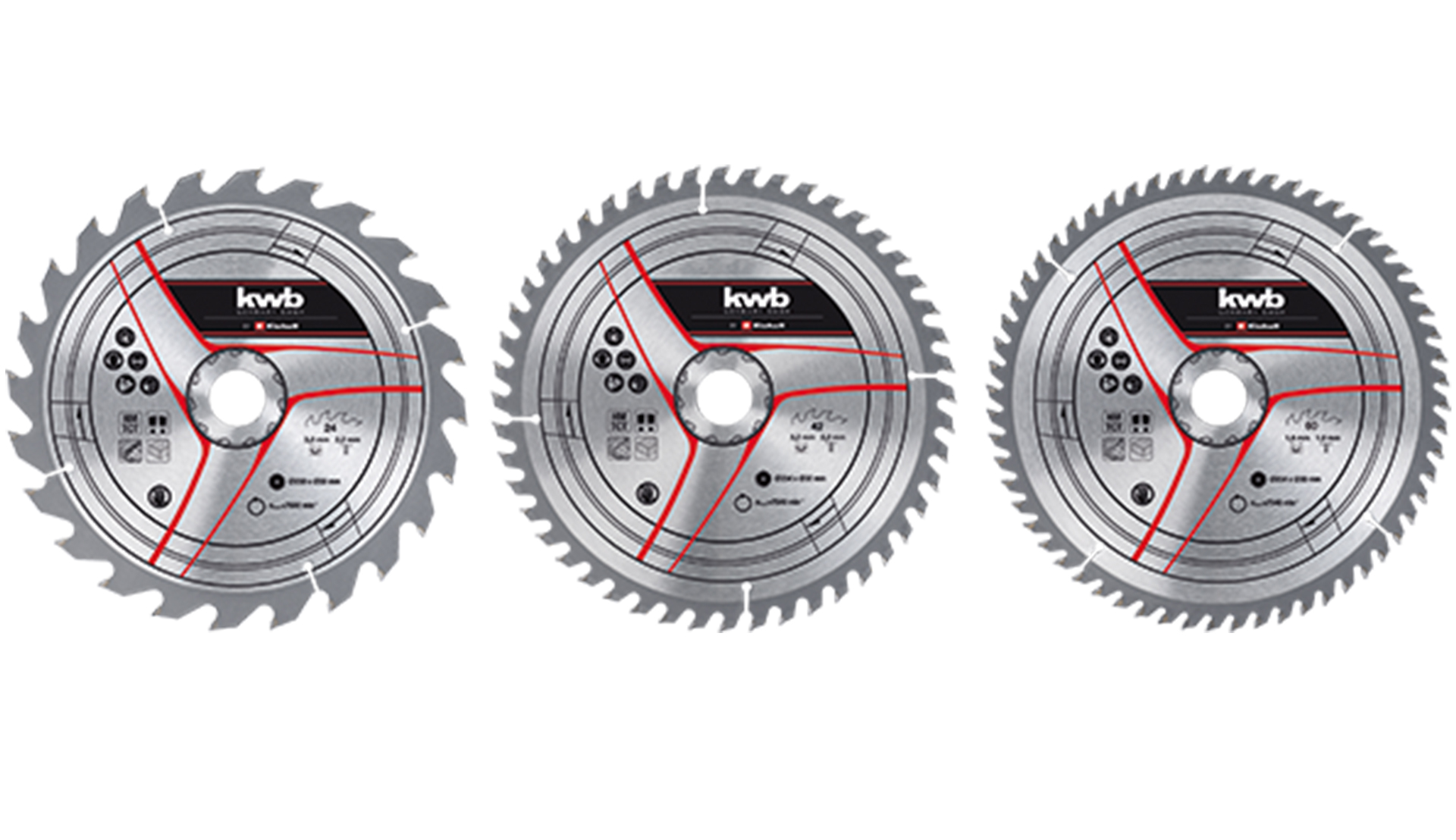
Which saw blade is suitable for which table saw?
How to Use a Table Saw Correctly
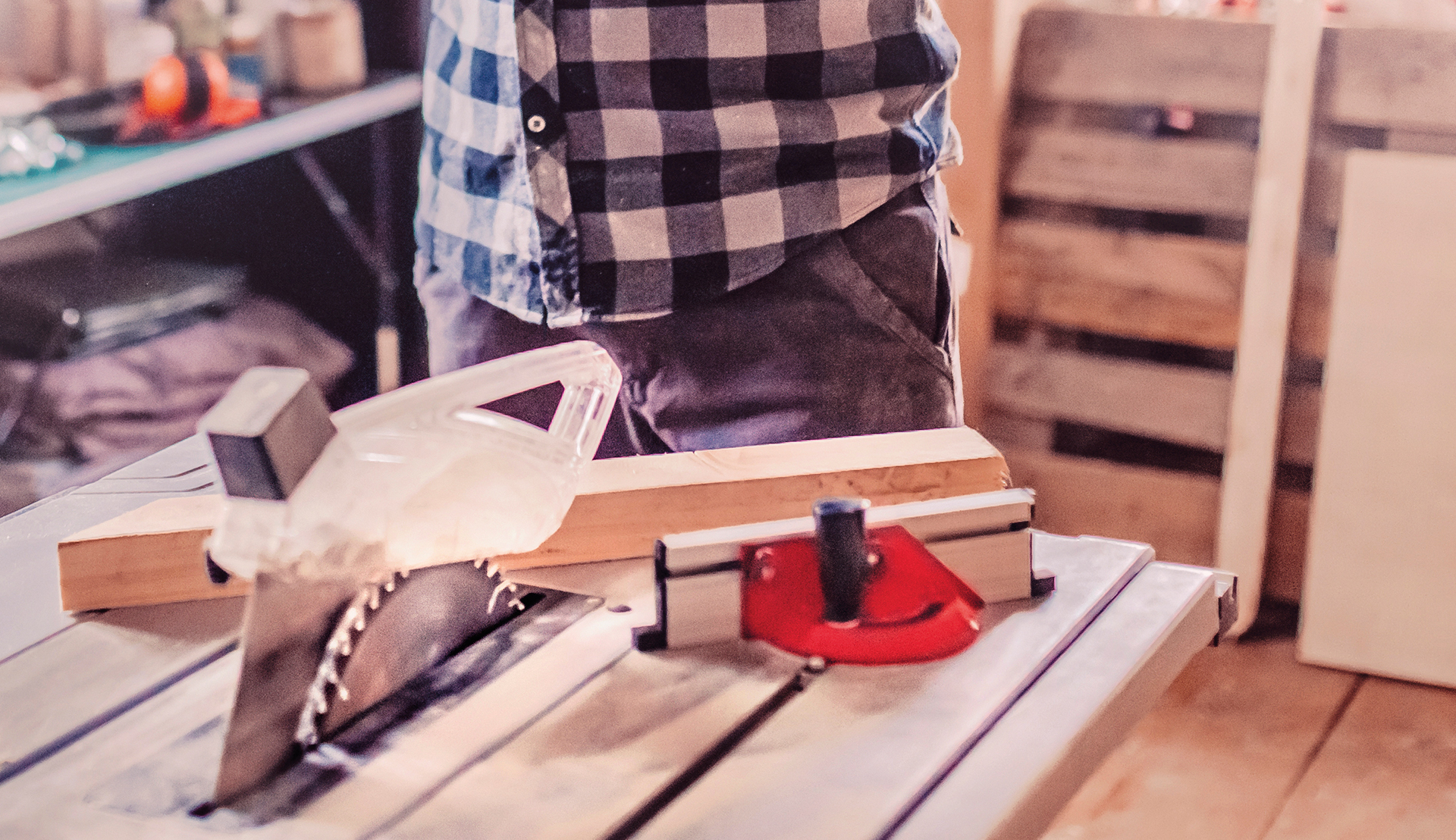
Now that you know what you need to keep in mind when working with the saw, you can start cutting. Make sure the circular saw is set up correctly, as this is essential for achieving a clean and precise cut. The mitre gauge, scale, and rip fence are particularly important. Below, we explain the key adjustment features of the saw and their functions in detail.
Mitre gauge
Make sure your saw is equipped with a mitre gauge. The mitre gauge allows you to make particularly precise angled cuts, for example. The mitre gauge on Einhell table saws is designed for mitre cuts from –60° to 60°.
Scale
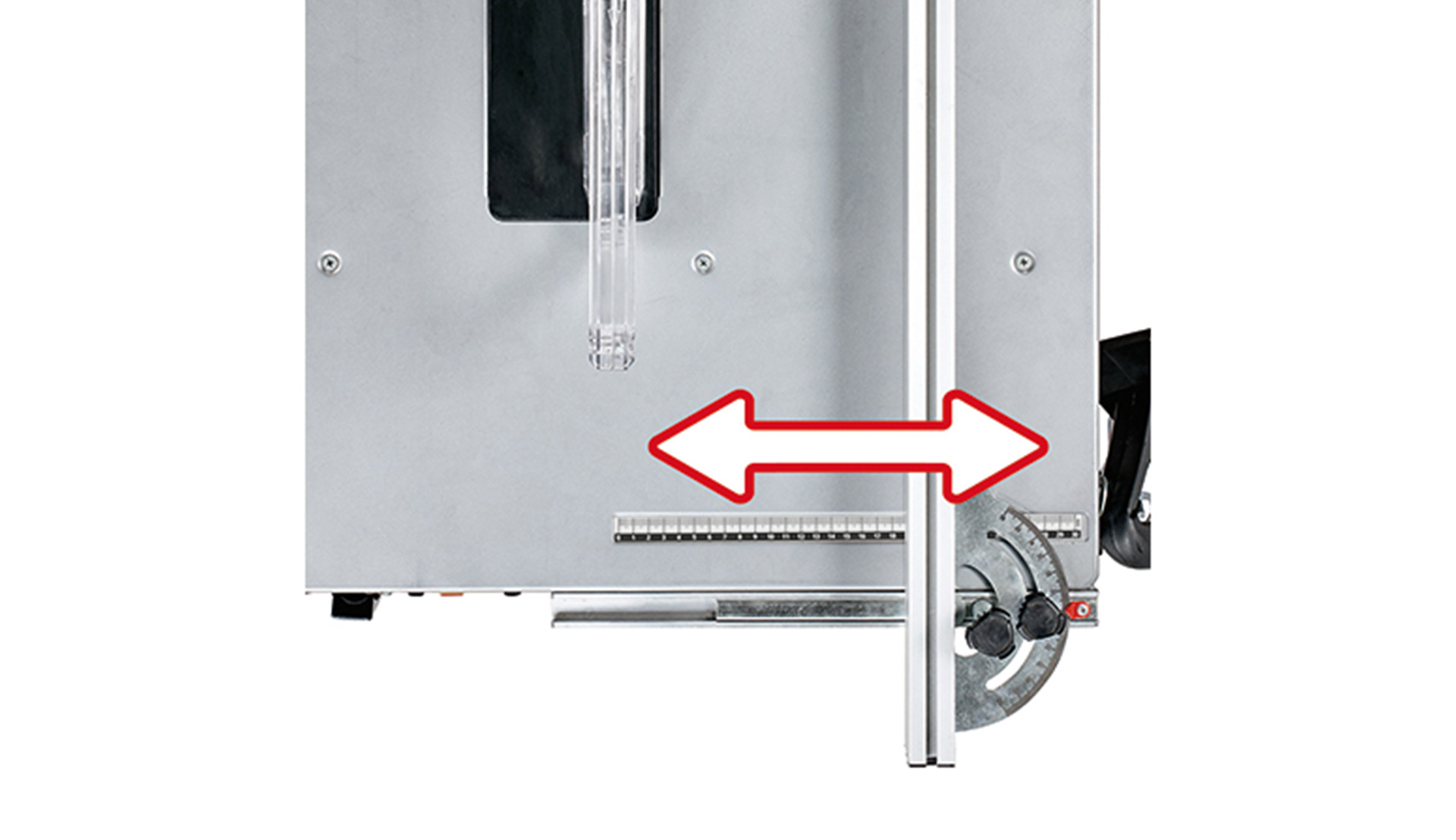
Always make sure that the distance between the rip fence and the saw blade is set correctly. Using the scale, you can adjust the distance between the rip fence and the saw blade so that each workpiece is cut to the same length and width, ensuring consistent cuts.
Rip fence
Use the push stick to guide the workpiece along the rip fence and through the table saw. The rip fence keeps the workpiece at a consistent distance from the saw blade, allowing for a precise cut. It is also important to make sure that the rip fence is always securely locked in place and is not too loose.


Once you have made all the necessary adjustments, you can start sawing. Always mark your cuts precisely and clearly, and work carefully and with full concentration when using the saw. You can find out which special features the machine offers in the video.
Summary:
As you can see, the circular table saw can be used for a variety of different applications and requires a great deal of sensitivity. In addition to careful handling of the machine, there are many other points to consider so that you avoid serious injuries and can achieve optimum results. However, with our tips you are guaranteed safe and optimal saw cuts for all your DIY projects. Become an Enabler!
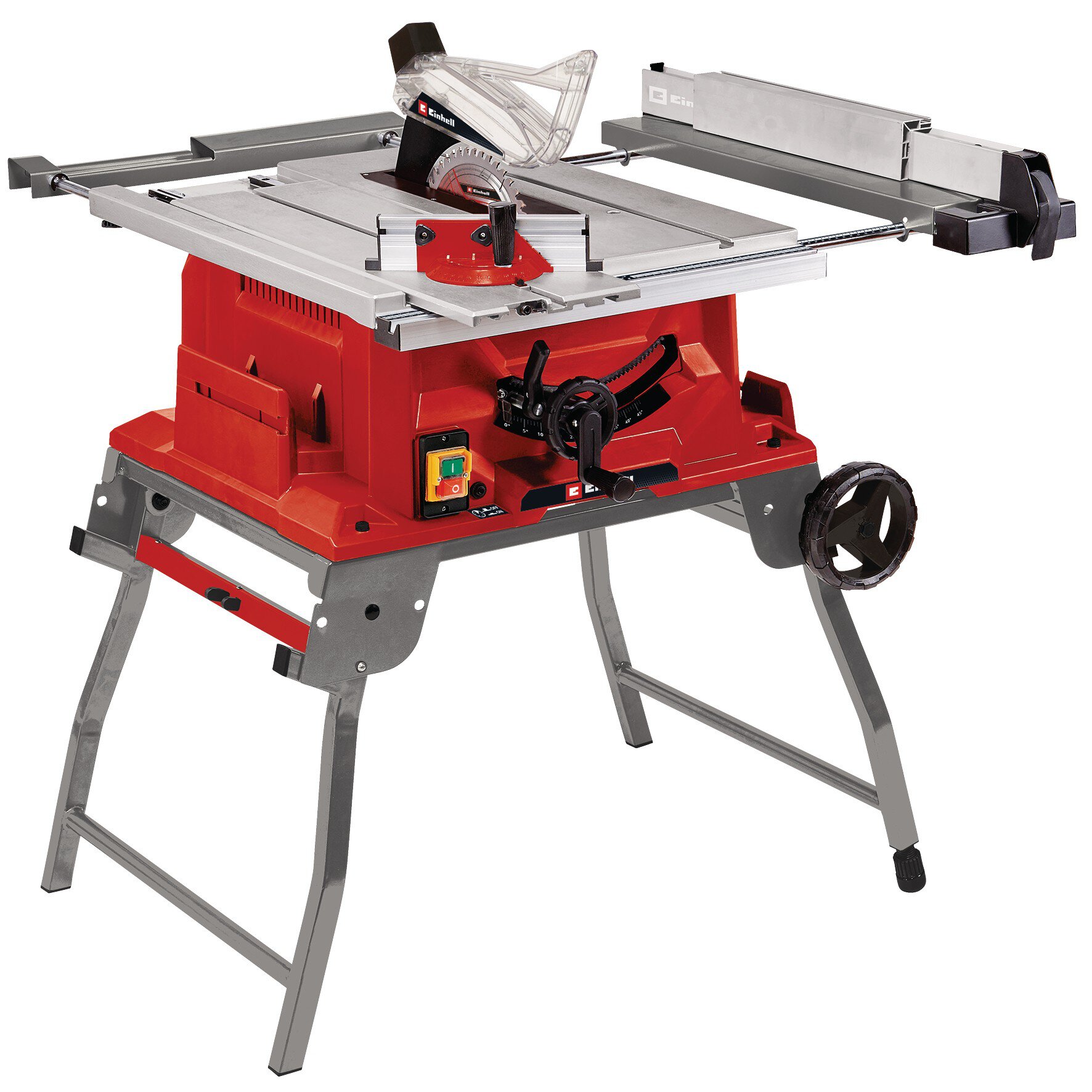
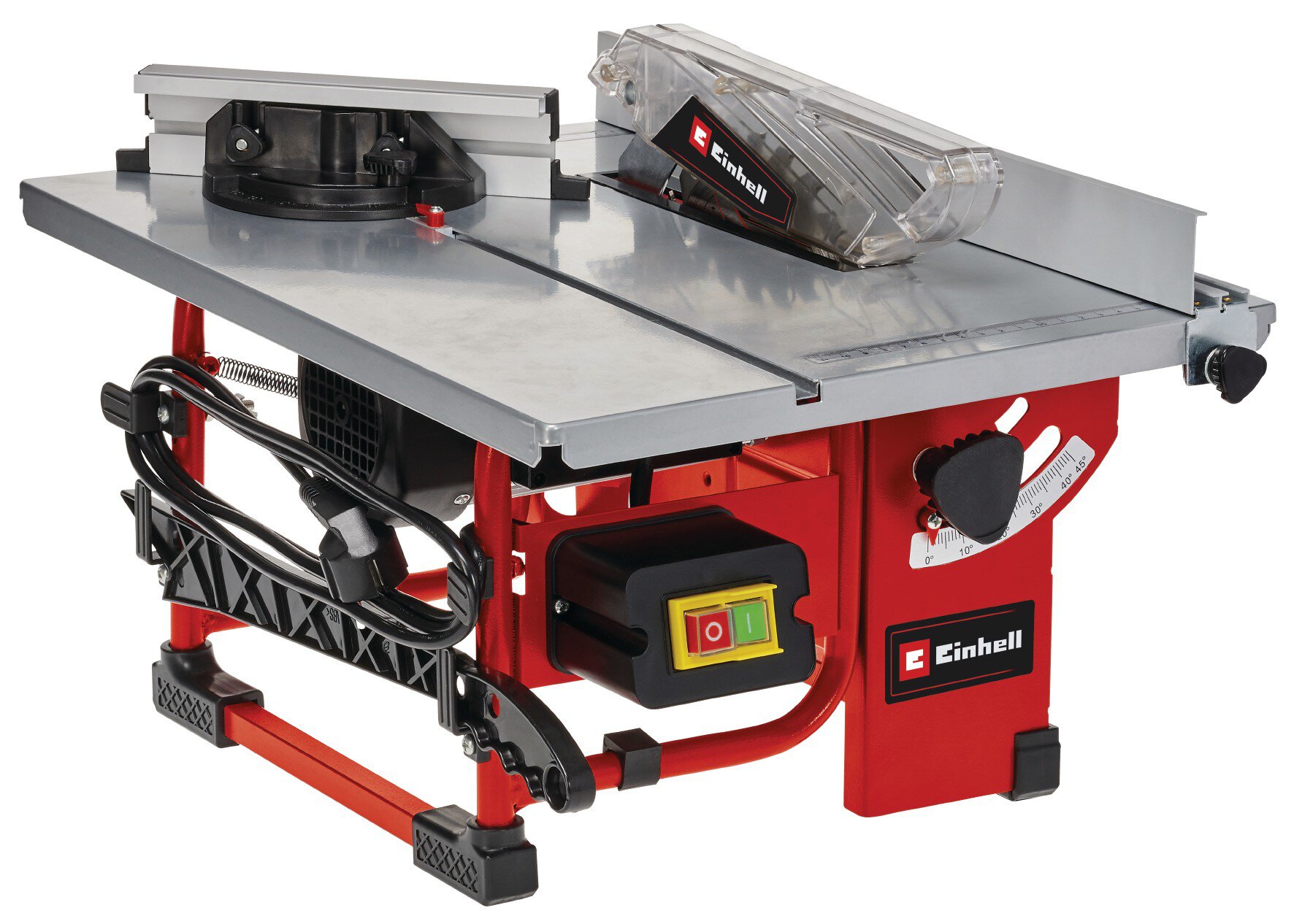
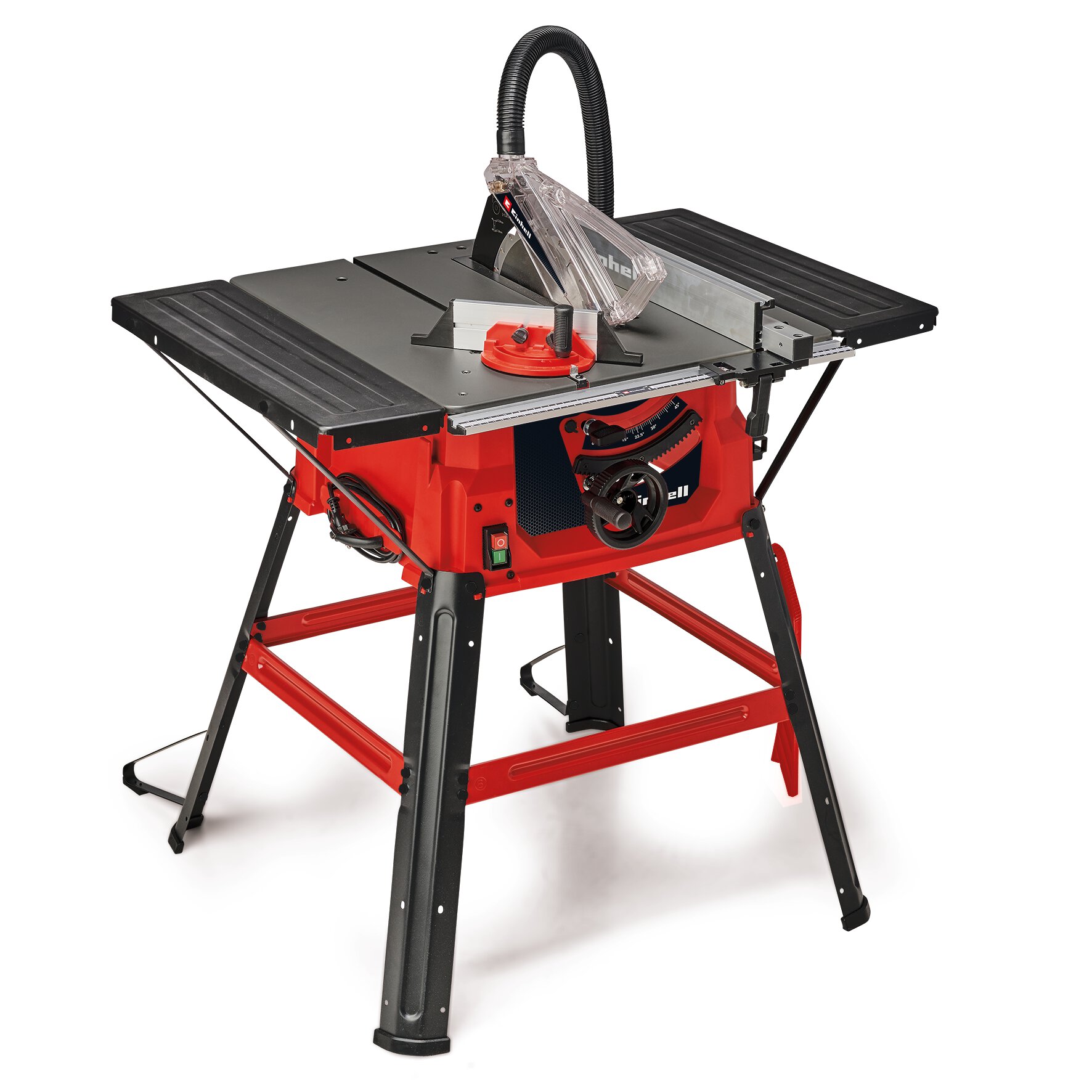
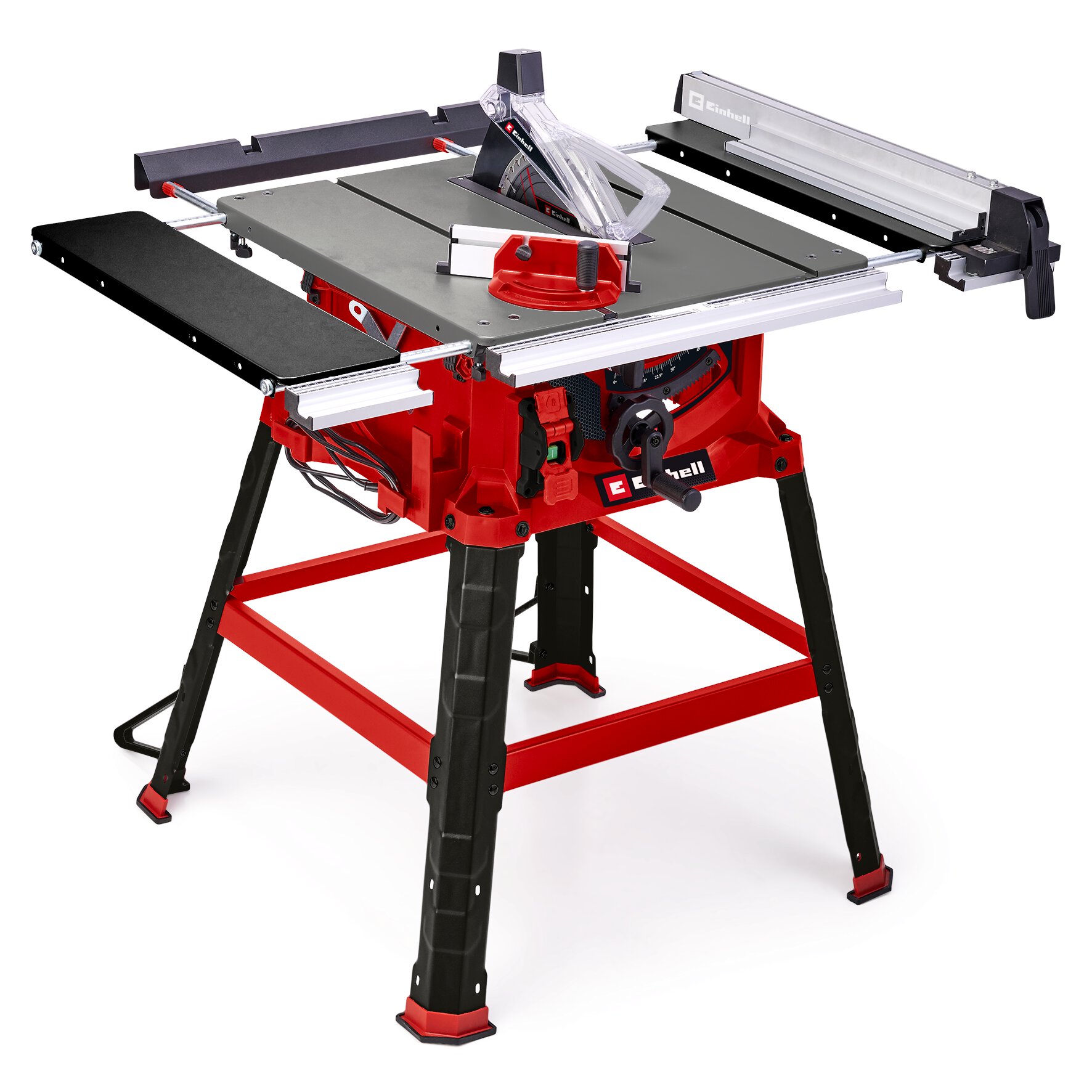
The best circular table saws from Einhell

Published on 01.12.2020
Monika Aigner is a Project Manager for Media & PR at Einhell. Through regular internal product training, she possesses extensive knowledge of the functionality and application of various Einhell tools and garden equipment. Combined with clear instructions, she imparts this knowledge in her blog posts.