


In this article you will learn all about:
Functionality
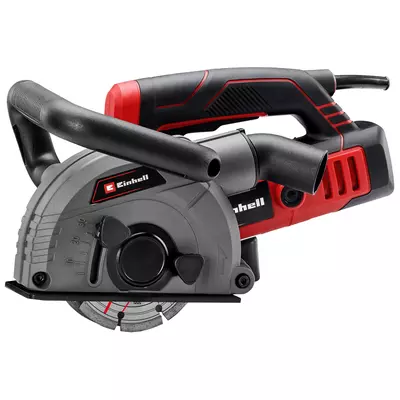
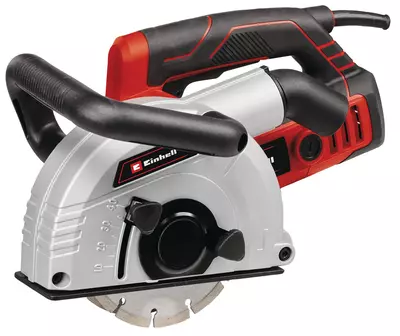
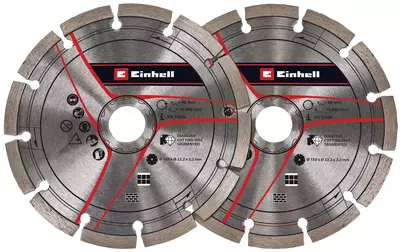
Basically, the wall grinder is an angle grinder in which two diamond blades are driven. A guide shoe is attached to the spring‐adjustable protective cover and ensures that the machine can be guided straight. The two diamond blades each cut a slot in the wall, whereby the depth and width can be adjusted beforehand. After slitting, the remaining central bar can be easily removed with a hammer and chisel or a hammer drill with a suitable chisel. The channel is ready!
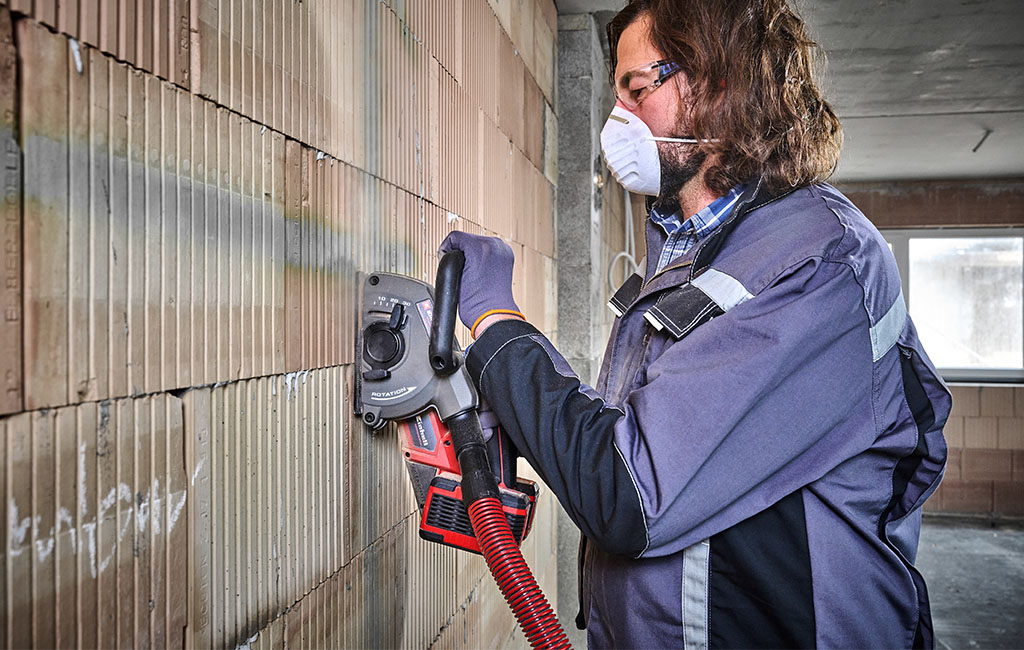
You can use a wall chaser to cut parallel slots into the wall.
Operation
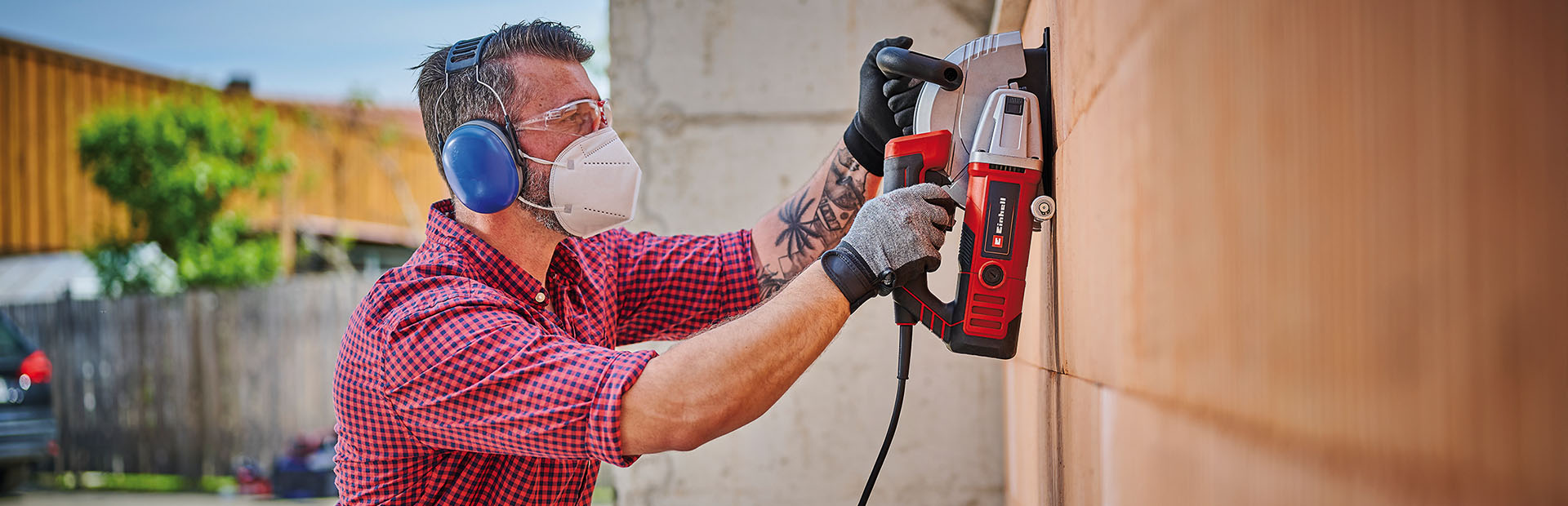
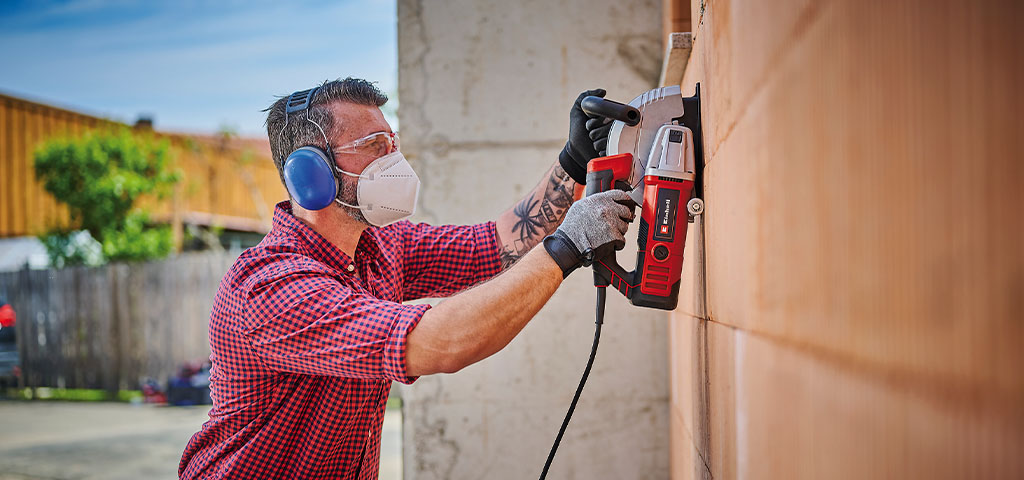
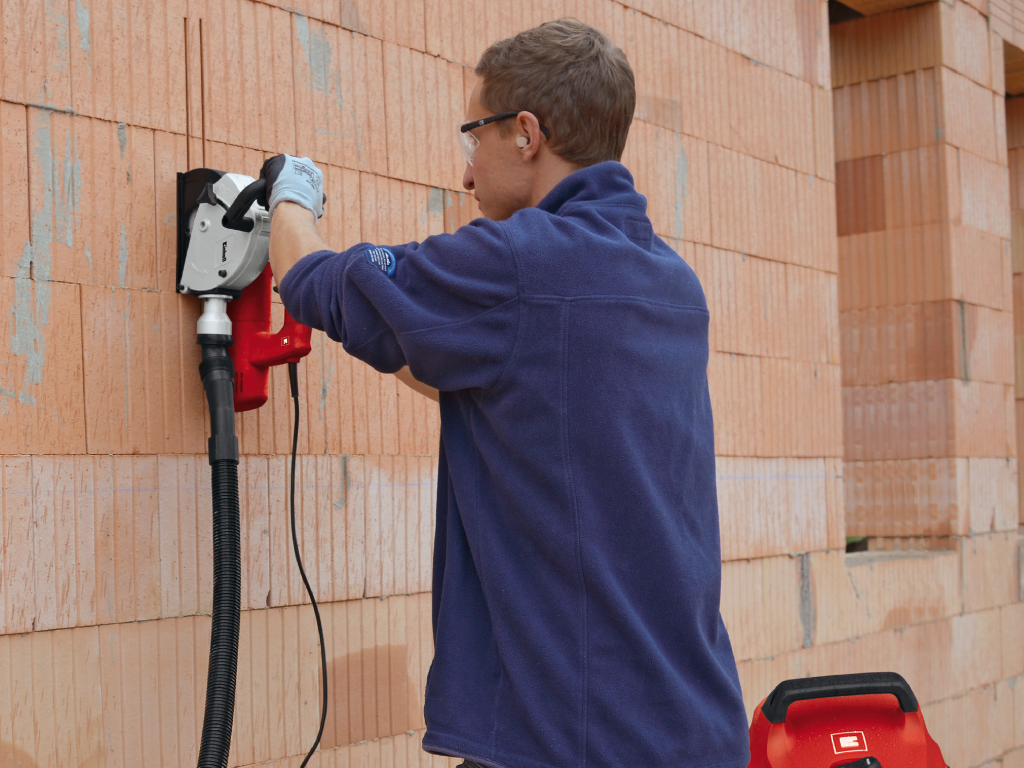
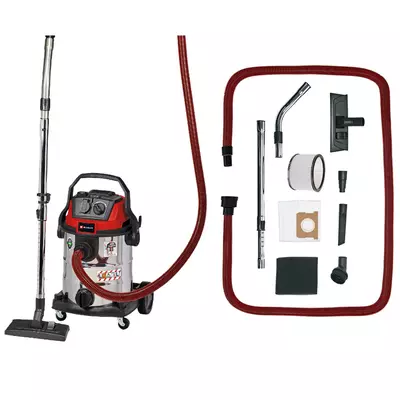
Due to the guide shoe and the adjustable protective cover, the grinder can be compared to a submersible saw. The grinder is attached to the wall, started and then the separator sheets are slowly dipped into the wall. The depth stop prevents the channel from being slotted too deeply. Now the grinder can be moved forward on the wall using the rollers on the guide shoe. This is naturally easier with plaster and aerated concrete than with concrete. But with the right diamond blades, even reinforced concrete is no problem. Proper extraction is important with this type of work. A connection for a powerful vacuum cleaner is provided on the protective hood, because the slitting of masonry causes an enormous amount of dust to be produced. Without proper extraction, you’ll barely be able to see your hand a few centimetres in front of your face.
💡Tip
Before milling, clearly mark the path of the channel. Spray paint, such as signal paint, works very well for this, as the marked lines remain easy to see even in dusty surroundings.
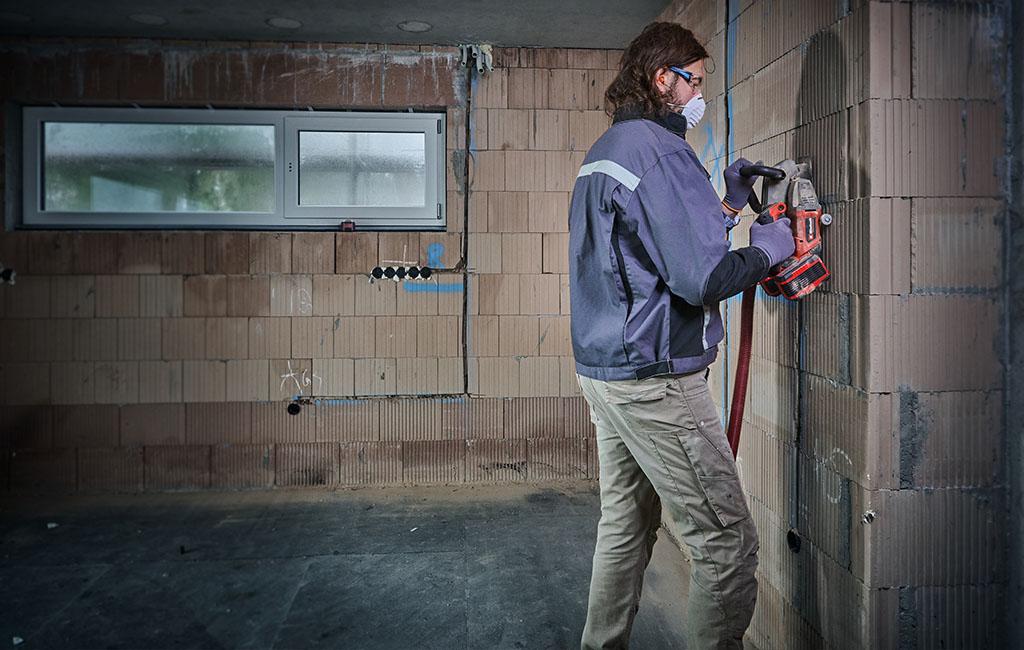
Work safely and cleanly: The right wall chaser makes slot cutting easier and protects against dust, noise and injuries.
Expert Tips
What you should look out for when buying and using it.
When buying a wall chaser...
- you should pay attention to the wall chaser’s power. If it is too low, blockages may occur and cutting the slots will take longer. The second important point is the weight of the wall chaser. After all, it has to be pressed against the wall and guided at the same time, which can require a lot of strength over time. With an input power of 1,300 watts, the ratio of power to weight is ideal for DIY use. Dust extraction only works properly if the protective guard adequately encloses the working area of the cutting discs. Ideally, the vacuum hose should also be attached with a bayonet fitting so that it does not slip off while you are working. The channel width can be adjusted using spacer discs, while the depth can be set with an adjustable depth stop, ideally with the slot depth indicated in millimetres. The slot width should be at least 25 mm, and the slot depth at least 20 mm. In terms of safety, an overload switch is a useful feature. A soft start ensures that the machine does not start abruptly.
When working with the wall chaser...
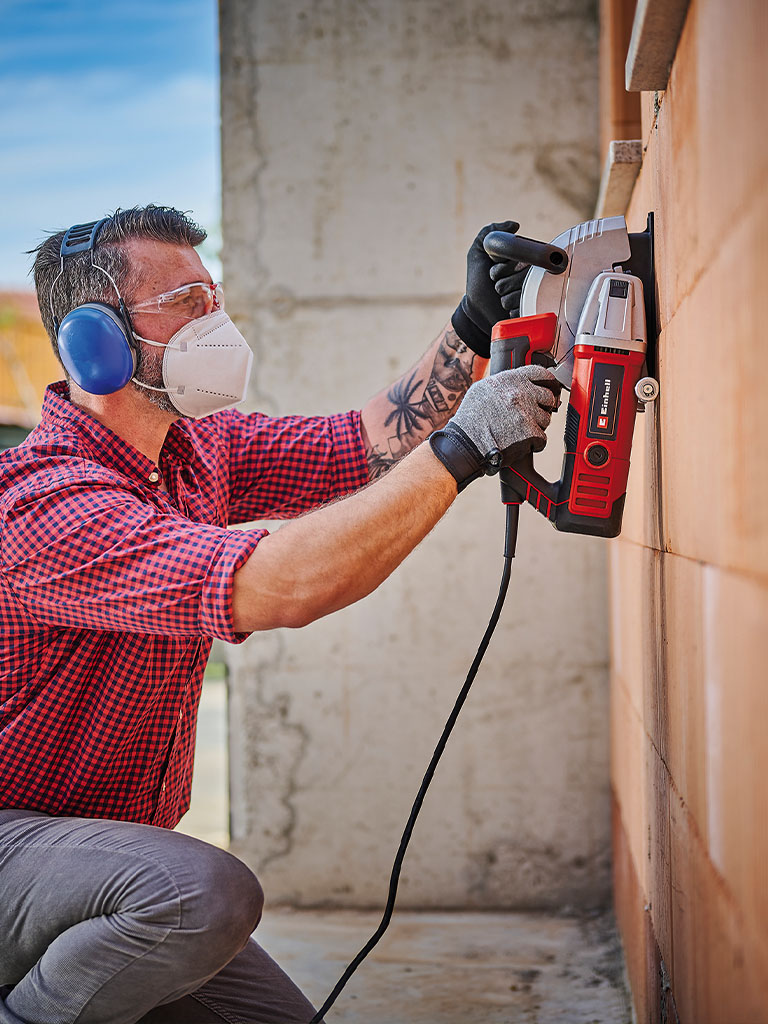
- you should follow the usual safety rules in addition to ensuring adequate dust extraction, which is usually provided by a workshop vacuum. Personal protective equipment is especially important here. Besides dust, small stones can also be thrown around, so safety goggles are essential. Due to the high noise level, hearing protection must be worn. Safety shoes and gloves are also recommended. Make sure there is nothing lying on the floor in the work area that could become a tripping hazard while guiding the wall chaser. Good ventilation should also be ensured despite dust extraction.
Summary
A wall grinder is the most practical solution for making wall channels for cables. In contrast to when using a hammer and chisel, you always have a uniformly wide and deep channel in this case. This is a definite positive when reworking, i. e. when plastering or filling the channel. The workflow is also much faster and the effort is less than with conventional chiselling.

Published on 25.09.2018
Whether it's drilling, hammering, or sanding, our professionals in the workshop and DIY field will show you how it's done. Frank Rath is a freelance blogger and a passionate craftsman. With his tips and tricks about Einhell tools, you will not only become an absolute DIY expert but also learn how to safely use each device.