


In this article you will learn all about:
Types and functions of sanders
The drywall sander
Drywall sanders, also known as ceiling sanders or wall sanders, are used for sanding filled drywall, ceilings and interior walls, as the name suggests. They remove wallpaper residue, adhesive residue, paint, varnish and loose plaster to prepare surfaces for further work, such as painting or wallpapering. With a rotating disc and sandpaper in a suitable grit, drywall sanders are ideal for working on plasterboard, filler and wood.
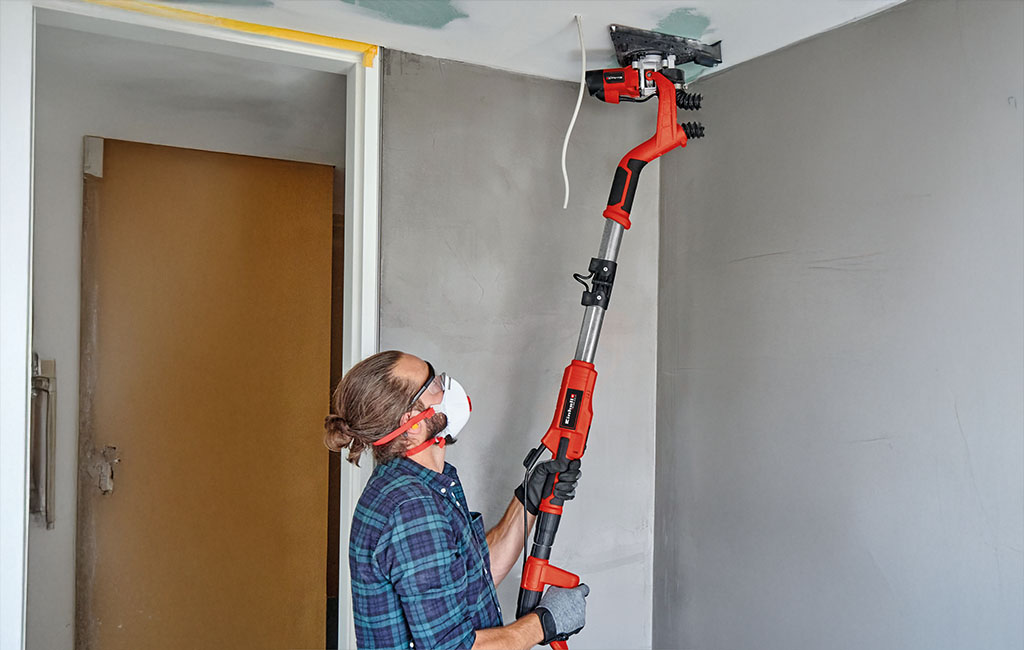
For work on ceilings or high walls, it is advisable to look for a drywall sander with a telescopic handle and a joint bearing on the sanding head. The adjustable length and increased mobility of the sanding head allow you to reach the surfaces you want to work on without a ladder or scaffold, saving time and improving work safety.

Difference between a concrete grinder and a drywall sander:
Compared to a drywall sander, the concrete grinder can also be used to sand and clean hard materials such as screed, concrete or granite thanks to its higher power and attachments such as diamond grinding discs or steel brushes. The drywall sander, on the other hand, is used for sanding softer materials such as plasterboard and filler. The concrete grinder, also known to some as a renovation grinder, is similar in design to an angle grinder and can therefore be easily distinguished from a drywall sander, which usually has a telescopic handle.
The concrete grinder
The concrete grinder uses its rotating disc to work on large concrete wall surfaces, ceilings and floors. It sands and smooths out uneven areas such as layers of paint, tile adhesive or carpet adhesive.
The orbital sander
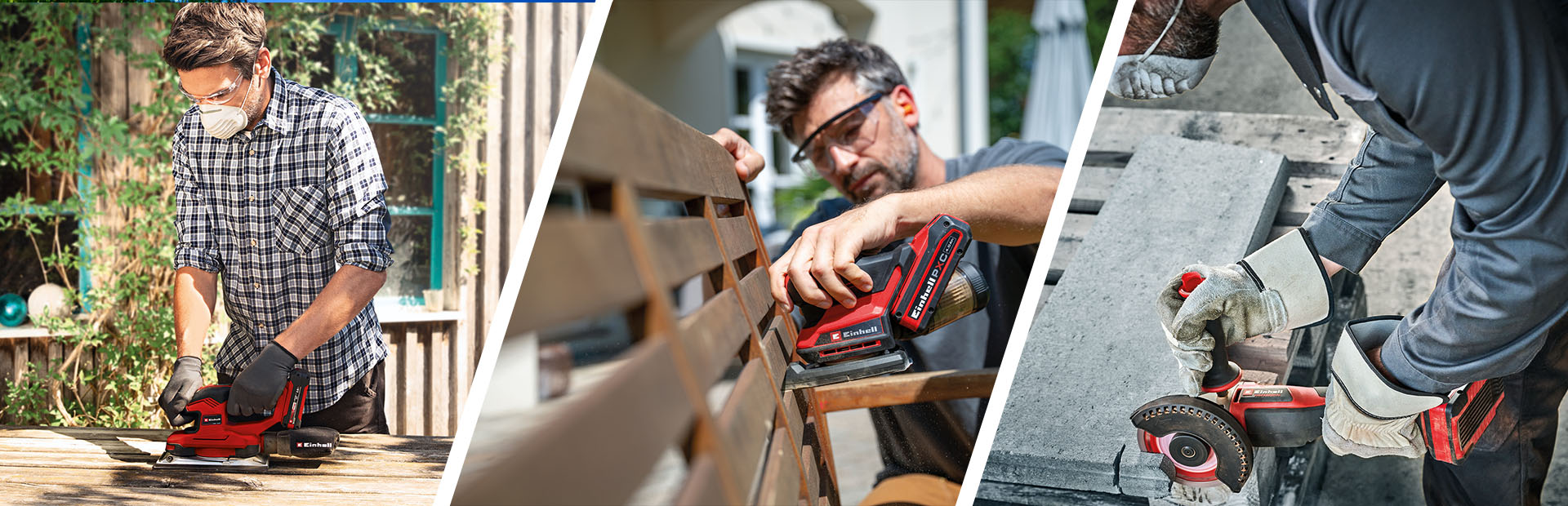
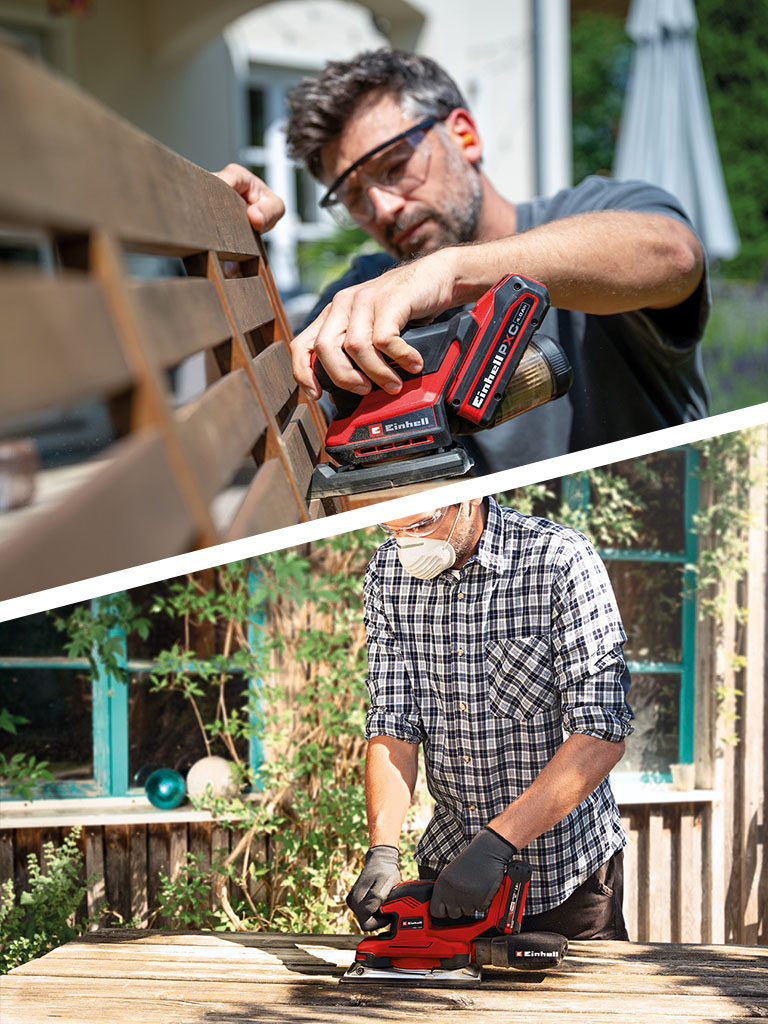
The rectangular sanding plate of the orbital sander moves across the surface in circular oscillating motions. It is best suited for surface sanding and can remove paint or varnish layers as well as work on wooden surfaces. The orbital sander is ideal for large, smooth surfaces, but can also be used on corners, edges and curves, for example to sand down a varnished wooden table.
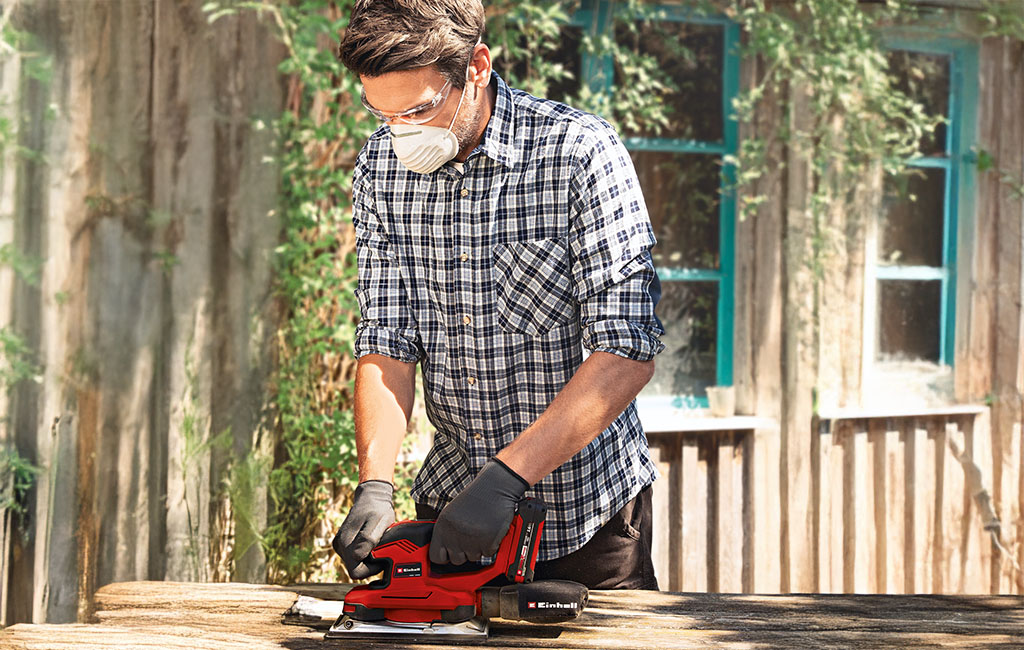
When using the orbital sander, make sure to guide it at a slight angle or in circular movements to create an even sanding pattern.
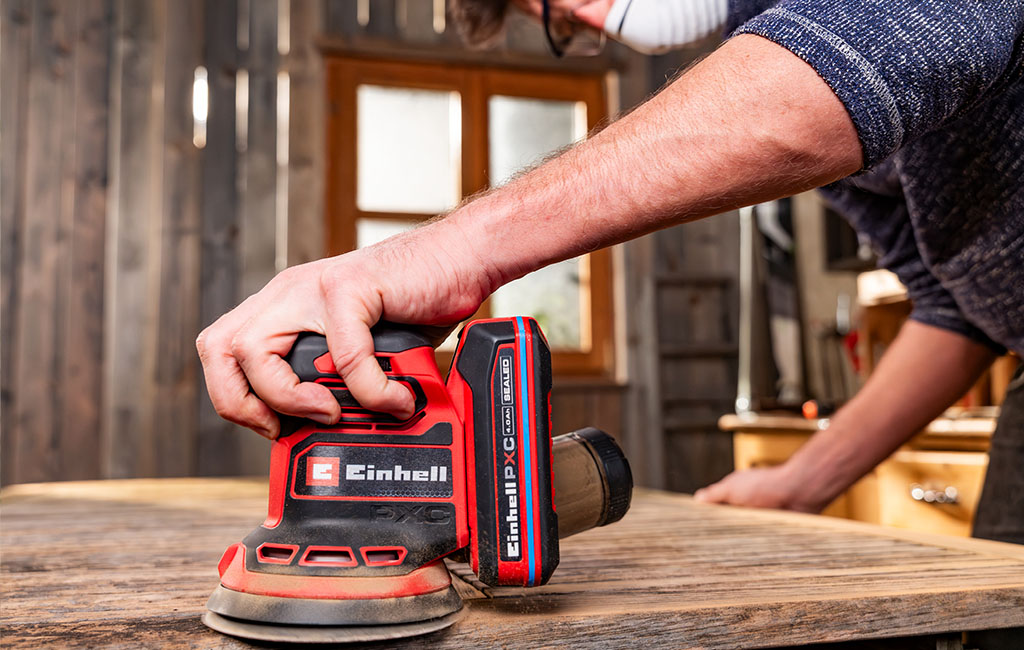
However, it is important to place the random orbital sander on the workpiece before switching it on. Otherwise, unsightly grooves may appear in the surface. With suitable attachments, the random orbital sander can also be used for other tasks: With a polishing bonnet, for example, the tool can also be used for polishing. The random orbital sander TC-RS 425 E, for example, is recommended here.
The random orbital sander
Unlike an orbital sander, which only uses an oscillating motion, the rotation of the sanding disc creates additional material removal. The random orbital sander is used for sanding medium-sized and large surfaces. Its eccentric sanding movements create a particularly even sanding pattern. Curved surfaces can also be sanded evenly thanks to the padded sanding disc and rotating disc movements. This sander removes a lot of material, making it ideal for sanding off paint and varnish and preparing surfaces for painting.
The belt sander
Instead of a sanding sheet, the belt sander has a continuous sanding belt. This makes the belt sander suitable for large to very large surfaces, as it has a high material removal rate. Its continuous sanding belt can be used on wood, plastic and metals. It is used to remove paint or varnish layers.
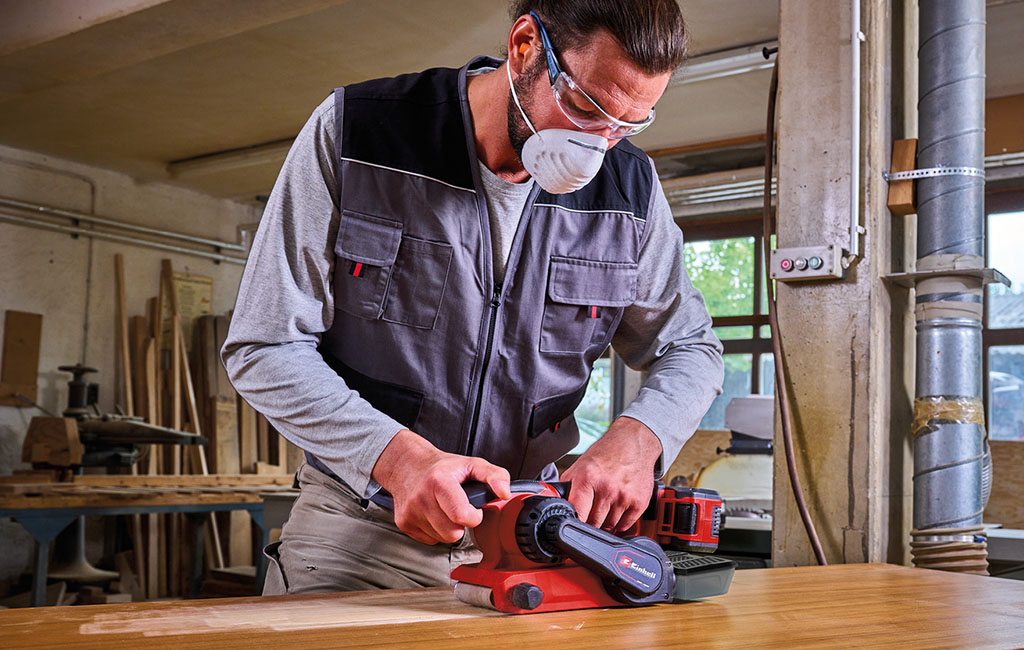
However, precise sanding with a belt sander takes some practice, as its design can easily cause grooves to appear during sanding. Beginners should therefore use the belt sander mainly for rougher work.
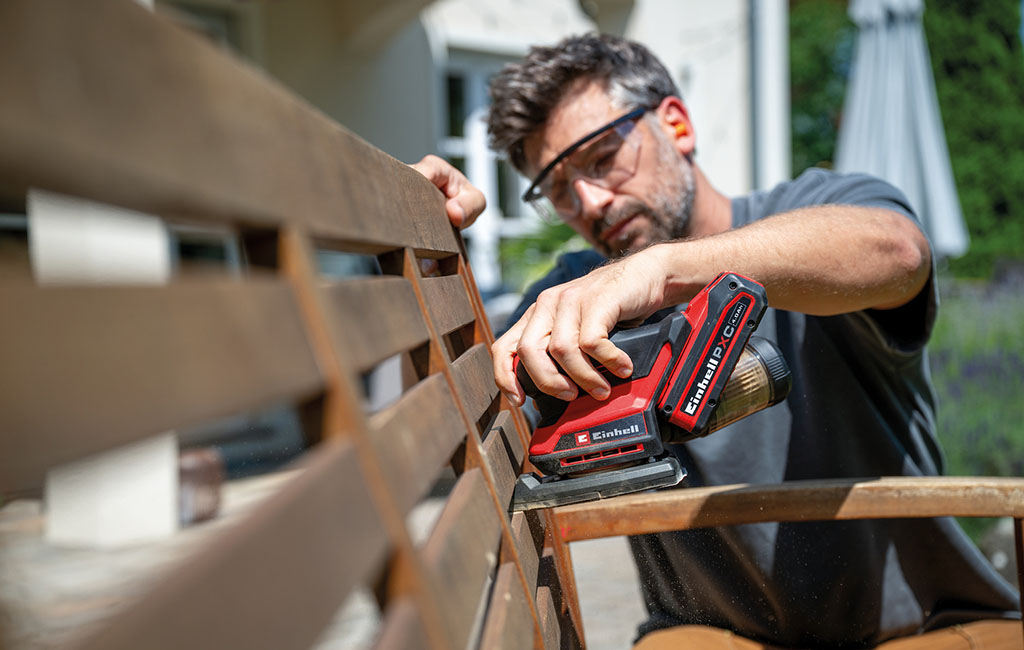
The multi-sander can be used on wood, metal, paint and varnished surfaces. By choosing the right sanding sheets, the multi-sander can be used for sanding, smoothing and even polishing.
The multi-sander
The multi-sander, such as the TE-OS 18/150 Li Solo from the Power X-Change family, is the all-rounder among sanding tools. Thanks to its iron-shaped sanding plate, it can be used flexibly. Its active dust extraction helps you keep your working area clean. The cordless multi-sander is used for working on small and medium-sized surfaces. However, its speciality is sanding small, hard-to-reach areas: With its pointed sanding surface, it is ideal for fine sanding rebates, corners and edges.
The delta sander
The delta sander does not differ significantly from the multi-sander in terms of its applications. Its triangular sanding sheet is even smaller than that of the multi-sander, making it the perfect solution for easier sanding in very small, angled corners and along edges.
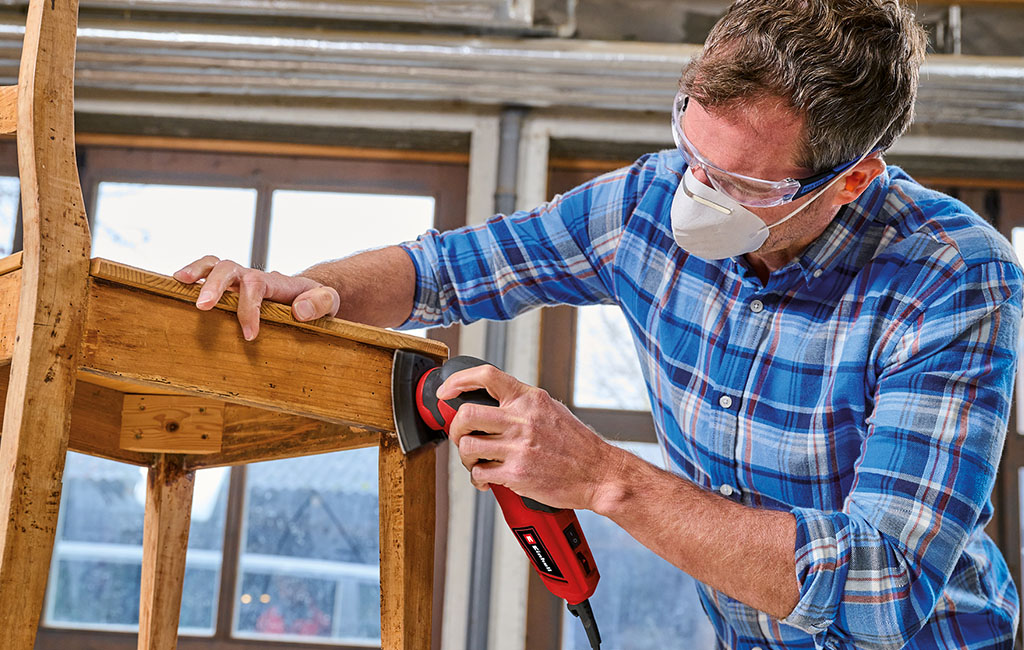
The ergonomic design and the handle, which is often equipped with a soft grip, also allow the sander to be guided with one hand. The type of sanding sheet depends on the material of the surface to be sanded.
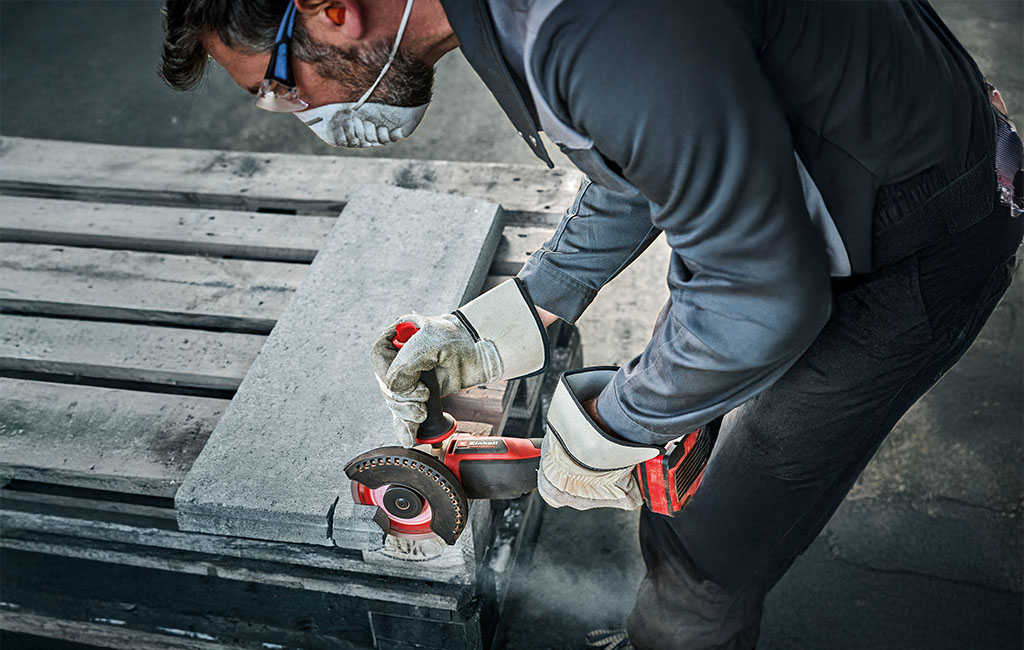
❗When working with an angle grinder, make absolutely sure that you never use the wrong disc.
The angle grinder
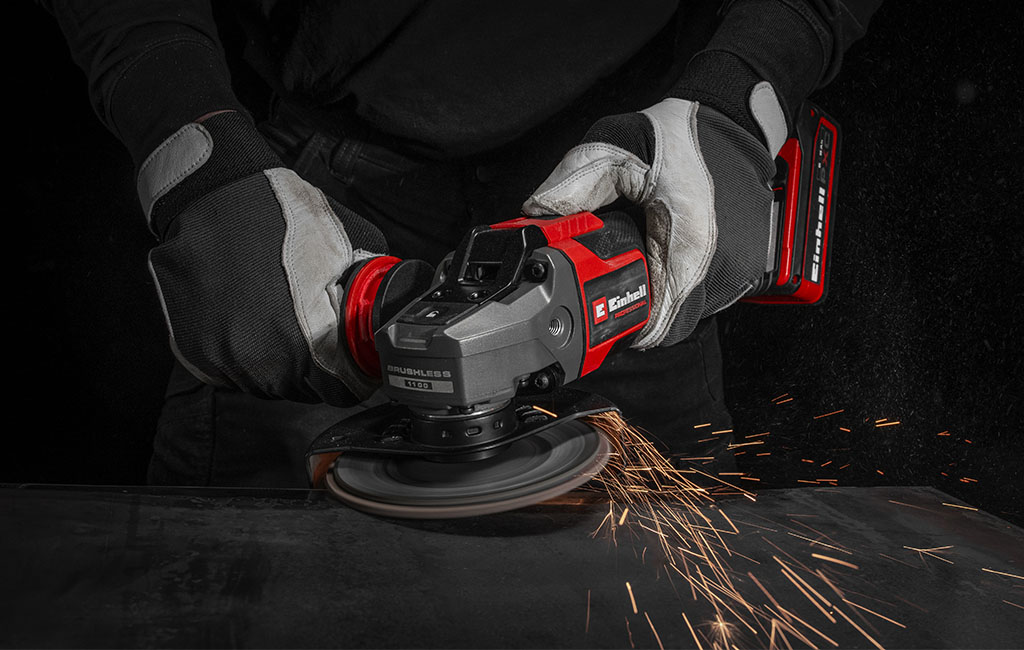
The angle grinder can carry out cutting, sanding and roughing work on a wide range of materials, depending on the disc used. Thanks to the wide variety of discs and attachments, many tradespeople and DIY enthusiasts believe that the angle grinder can even replace other tools.
Which disc should you use for an angle grinder?
- Cutting discs: As the name suggests, cutting discs are used for cutting work. They are available in different materials, diameters and thicknesses. It is important to check the specified disc diameter of the angle grinder. Disc diameters of 115, 125 mm and 230 mm are the standard sizes. Depending on the cutting disc selected, the angle grinder can cover different areas of application. For example, different cutting discs are used for cutting tiles than for cutting through granite, and different discs are used for metal than for stainless steel. Only wood and plastics are better cut with suitable saws due to the high temperatures generated when using an angle grinder. Due to their thin design, cutting discs are ONLY suitable for cutting work. If you were to grind with them, there would be a high risk of them bursting and injuring the user with flying parts. When polishing or sharpening metals, you should also make sure not to use a 230 mm or larger cutting disc. Otherwise, the power of the angle grinder could damage the surface of the workpiece.
- Roughing disc: A roughing disc allows the user to roughly grind workpieces. As roughing discs are usually much thicker and wider than cutting discs, around half a centimetre, they are not suitable for cutting work. Thanks to their stability, however, they are ideal for roughing away major uneven areas and roughening surfaces.
- Grinding disc: When using grinding discs, it is important to make sure that they are made of the right material. Grinding discs made of aluminium oxide, for example, are generally used for grinding metal, such as removing rust. Diamond grinding discs, on the other hand, are suitable for work on stone, concrete, ceramic or tiles.
💡Tip: When working with the grinding disc, you should not move it in the direction of rotation, but in the opposite direction. This gives you the best possible control and a better sanding pattern.
Which sanding sheet for which application?
As a general rule for abrasives: the smaller the number on the back of the abrasive, the coarser the grit and sanding result, and the more material is removed during sanding. The larger the grit size, the finer the sanding pattern and the lower the material removal. As a rule, sanding always starts with coarser grit grades and then gradually moves on to finer ones. Here is a brief overview:
| Grit | Sanding | Examples |
|---|---|---|
| 6-30 | Very coarse | Removing paint layers |
| 40–80 | Coarse | Rough pre-grinding and shaping the wood |
| 100–200 | Fine | Fine sanding for wood surfaces |
| 220–1000 | Very fine | Re-grinding of painted surfaces |
| 1000+ | Extremely fine | Polishing of e.g. resin |
Tools in this article
Here we have listed all the tools from this article for you again.
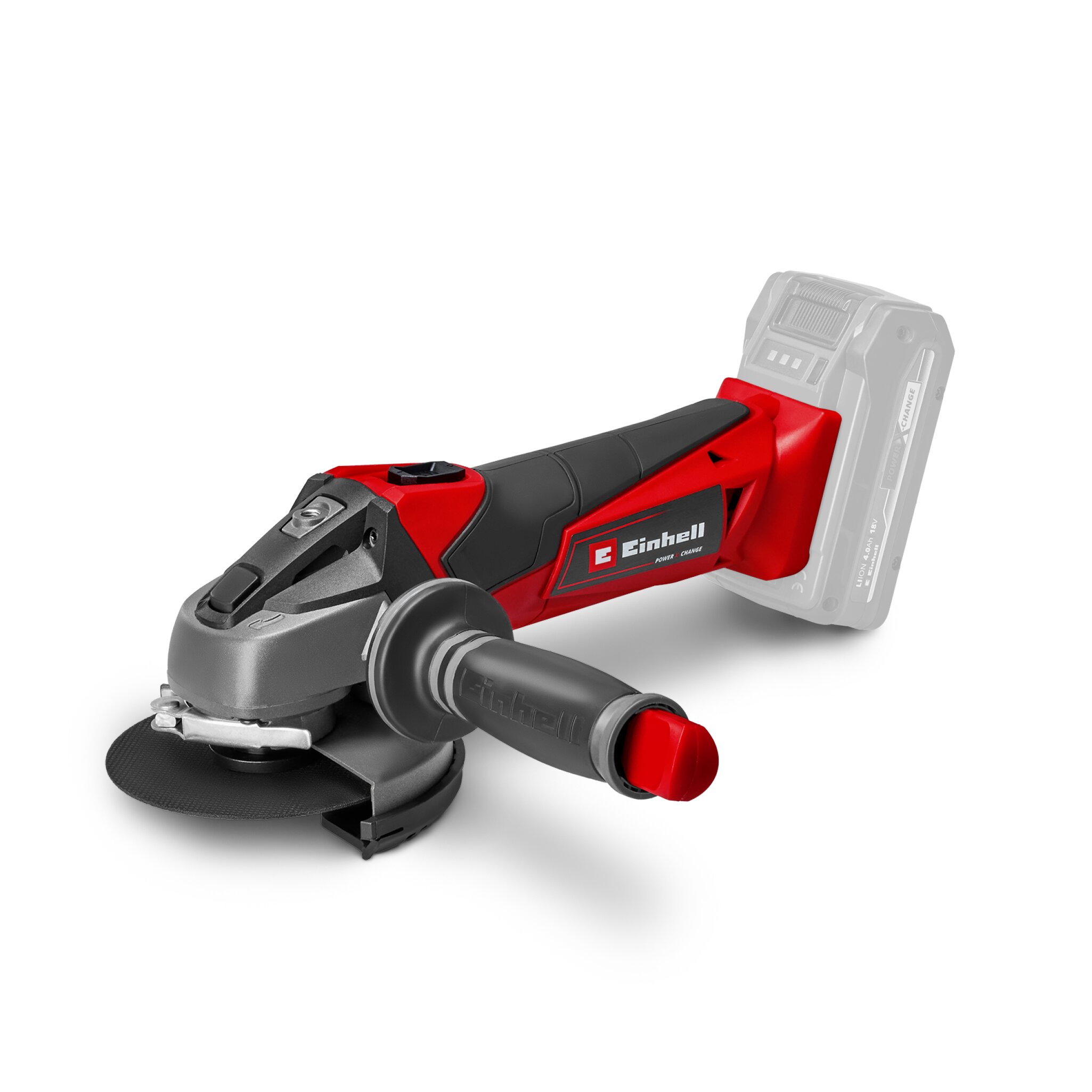
Cordless Angle Grinder
TE-AG 18/115 Li-Solo
Go to article
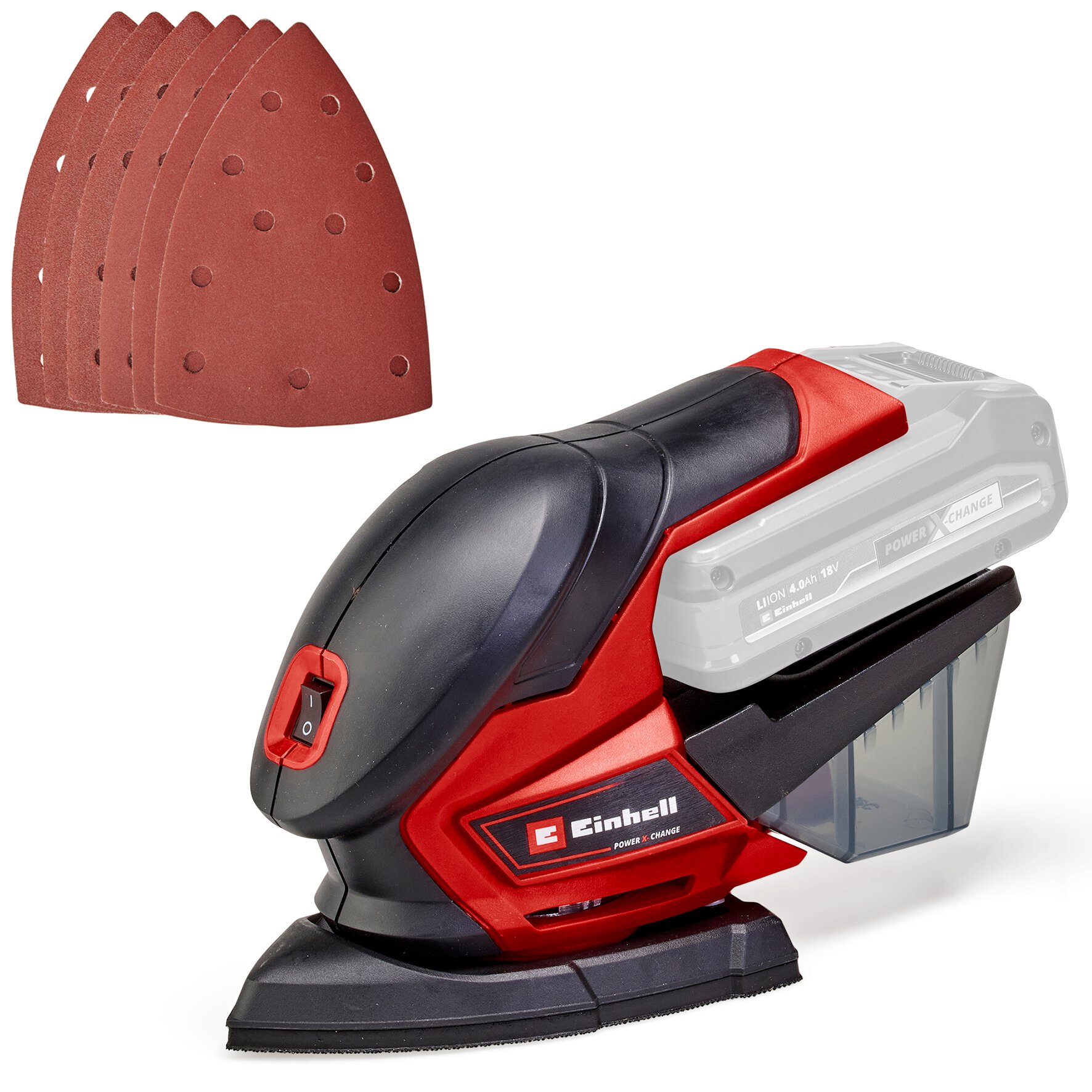
Cordless Multiple Sander
TE-OS 18/150 Li Solo
Go to article
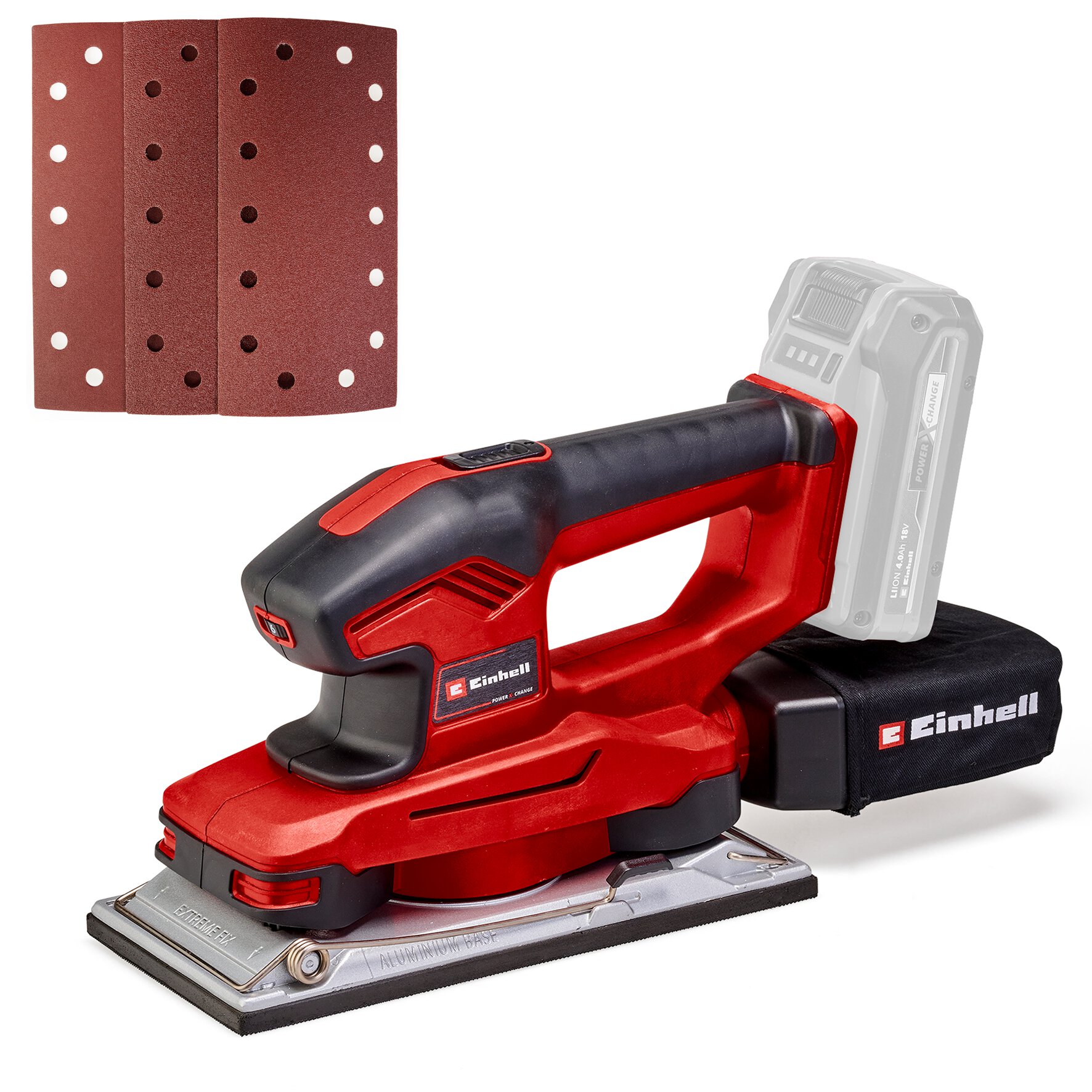
Cordless Orbital Sander
TE-OS 18/230 Li Solo
Go to article
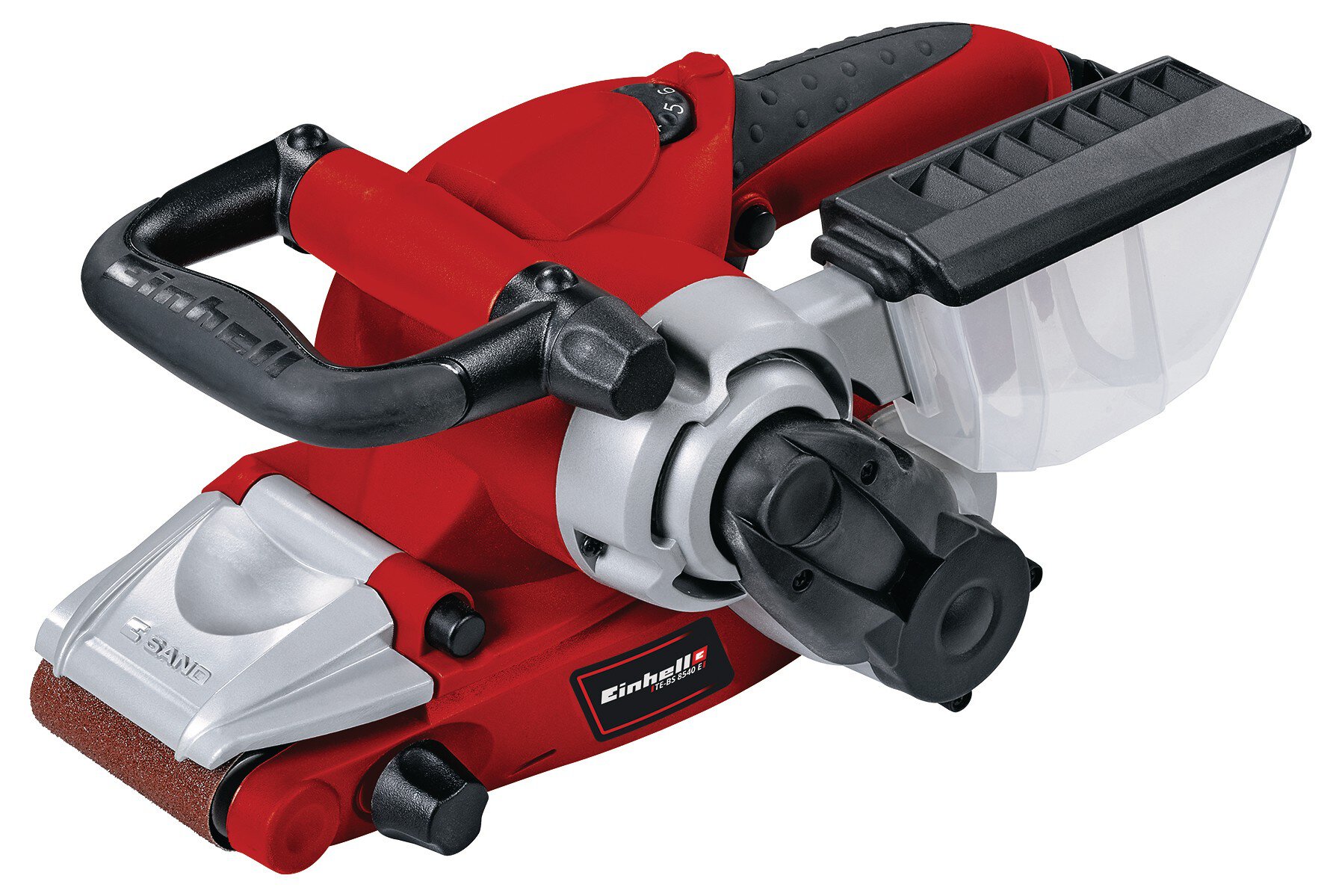
Belt Sander
TE-BS 8540 E
Go to article
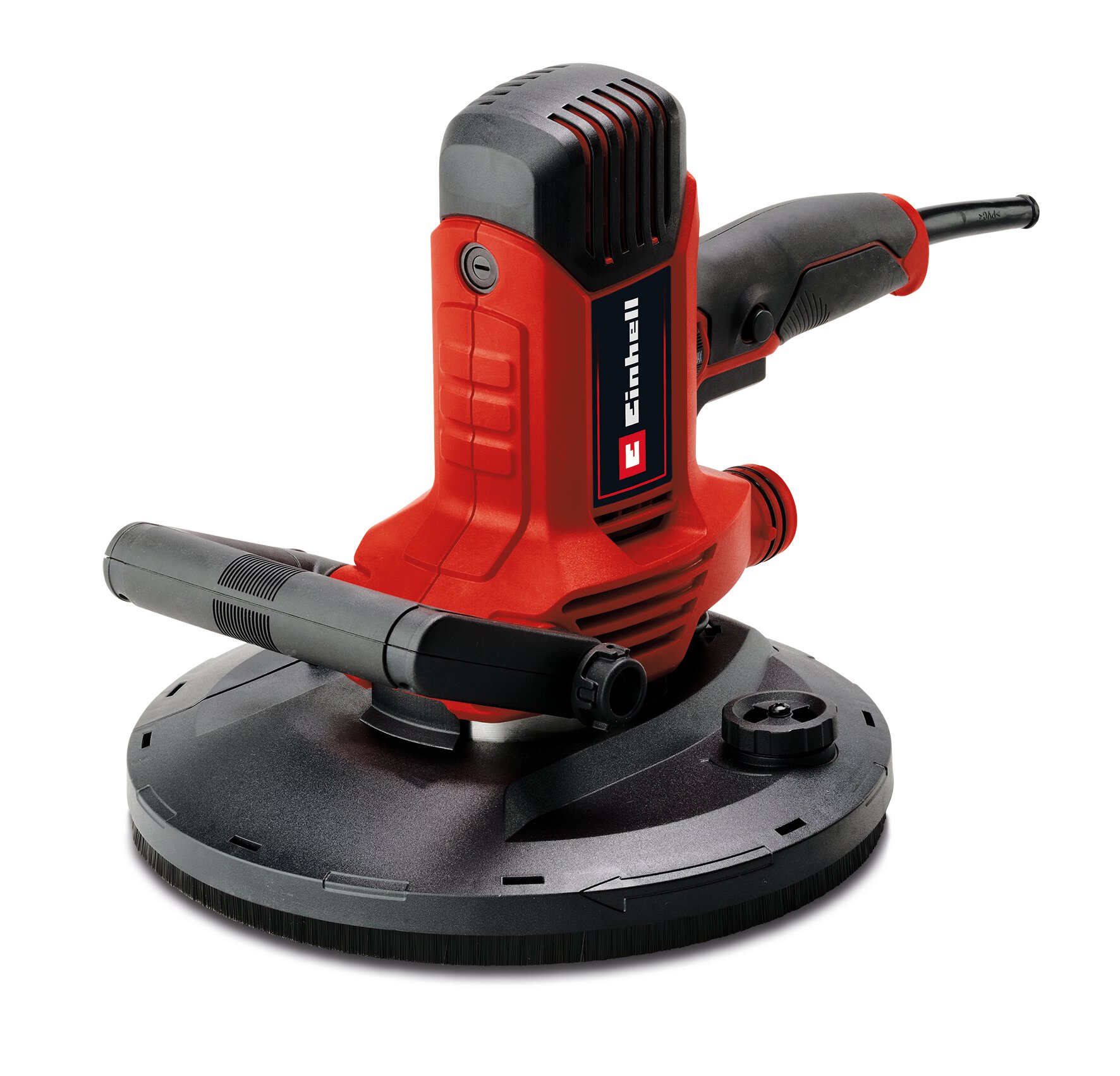
Drywall Sander
TC-DWS 225
Go to article
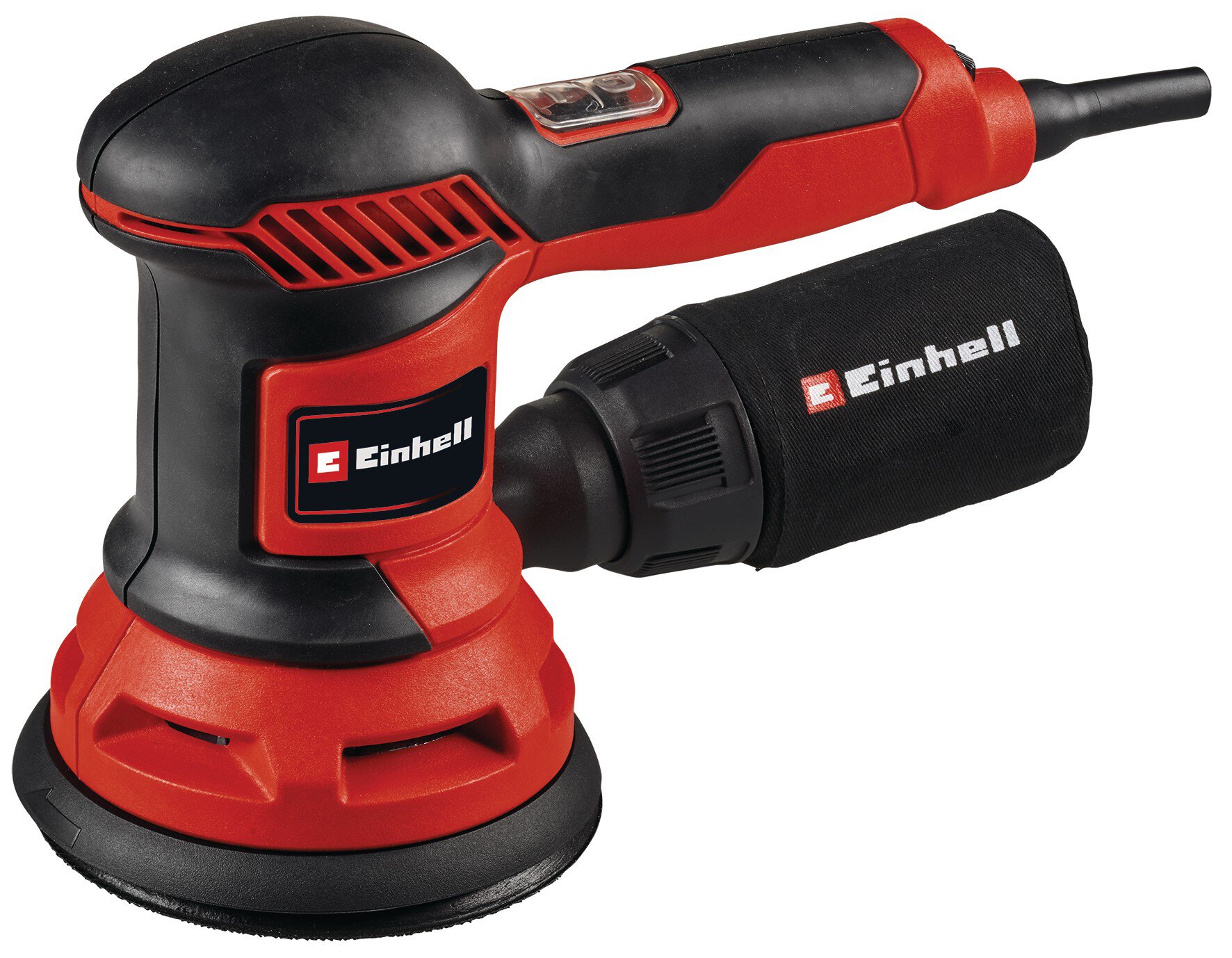
Rotating Sander
TC-RS 425 E
Go to article
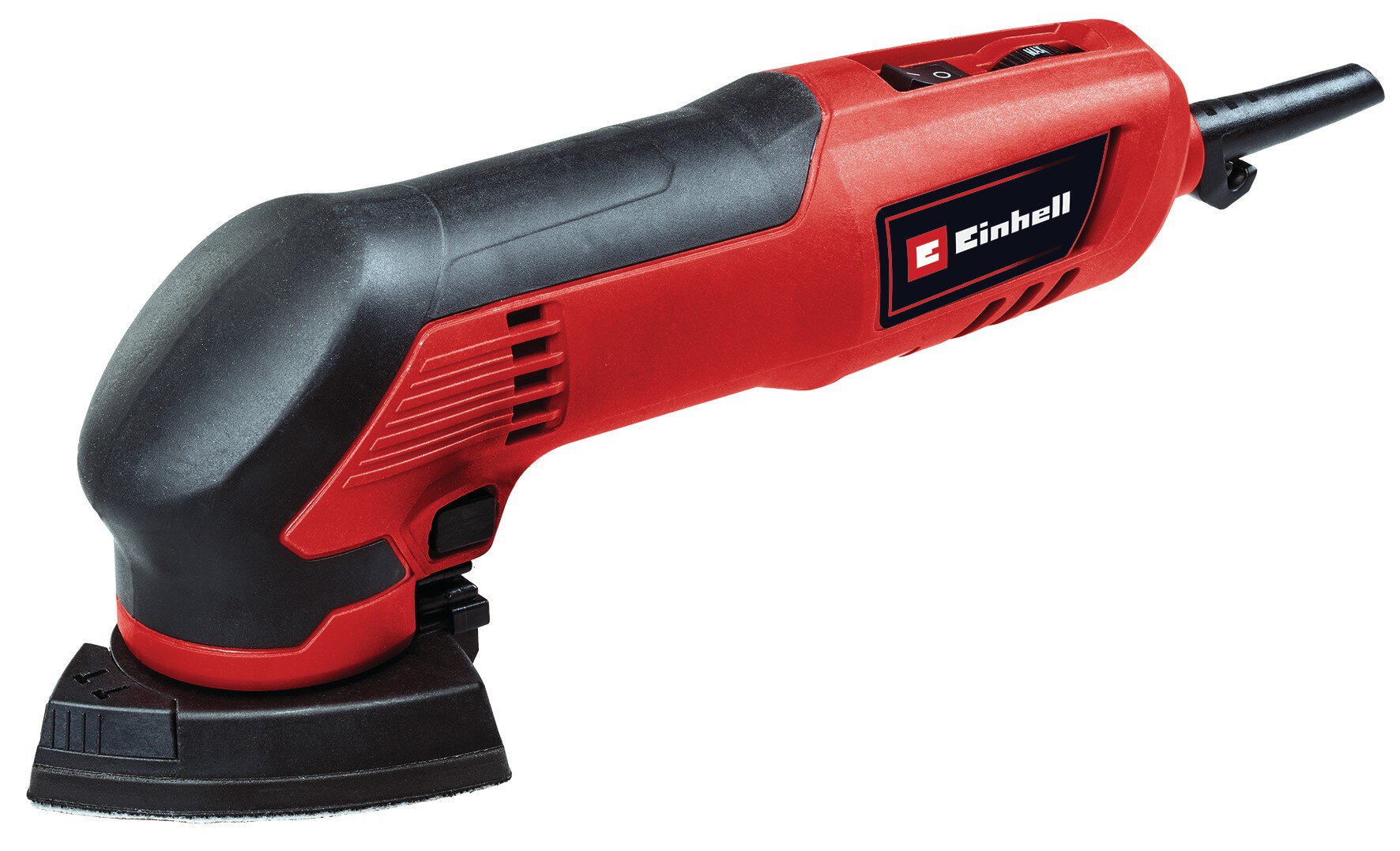
Delta Sander
TC-DS 20 E
Go to article
Conclusion
Whether wood, metal, concrete or drywall: There is a suitable tool for every sanding job. While drywall sanders and concrete grinders are mainly used for renovation work, orbital sanders, random orbital sanders, belt sanders, multi-sanders and delta sanders are particularly suitable for working on wood, varnish and hard-to-reach areas. The angle grinder, on the other hand, is a versatile tool for cutting, grinding and roughing work on hard materials.
The right accessories, suitable grit and good dust extraction also play a key role in achieving a clean and safe result. This helps you find the right sander for every project and work efficiently, cleanly and with control.

Published on 17.06.2019
Whether it's drilling, hammering, or sanding, our professionals in the workshop and DIY field will show you how it's done. Frank Rath is a freelance blogger and a passionate craftsman. With his tips and tricks about Einhell tools, you will not only become an absolute DIY expert but also learn how to safely use each device.